Showing posts with label Vietnam. Show all posts
Tuesday, July 17, 2018
Interview with Mary Lawlor, Author of Fighter Pilot's Daughter
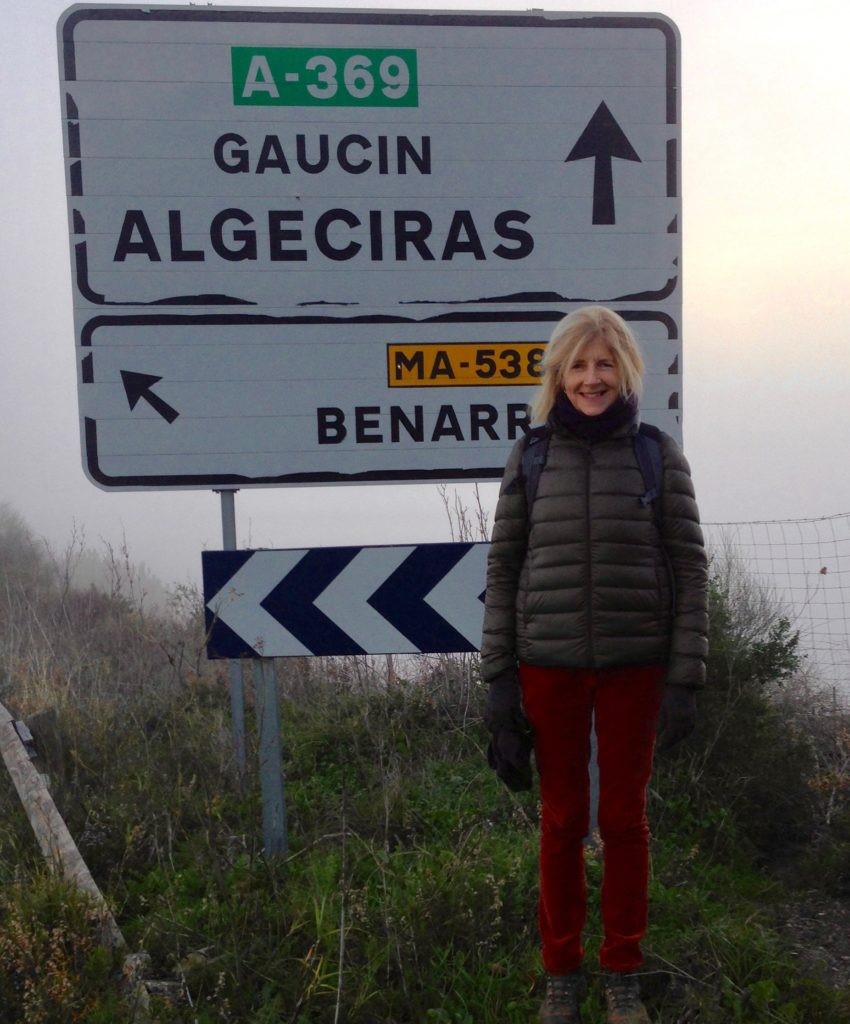
Mary Lawlor is author of Fighter Pilot’s Daughter: Growing Up in the Sixties and the Cold War (Rowman & Littlefield paperback 2015); Public Native America: Tribal Self-Representation in Casinos, Museums and Powwows (Rutgers UP, 2006); and Recalling the Wild: Naturalism and the Closing of the American West (Rutgers UP, 2000). She lives in Allentown, PA and Gaucin, Spain.
Thank you so much for this interview, Mary. Can we begin by having you tell us why you wrote your book, Fighter Pilot’s Daughter?
I thought about writing a memoir during the last several years I was teaching at Muhlenberg College. I’d long since gotten used to the fact that I had no place to call home and to not knowing where in the world I belonged, but I felt that writing the story of all the moves my family made would help me better understand my roving girlhood. Therapy, talking to other military kids, and finally settling down in one place helped, but not quite enough. I needed an account, a narrative, of what had happened to me and my sisters during all that shifting around. Our father was away for long periods of time, in very dangerous situations. Our mother was always worried. These weren’t easy things to live with. I felt if I could write out the sequence of moves and try to get back inside the feelings that came with them I might be able to make better sense of what being an Army kid did to and for me.
During my last few semesters at Muhlenberg I taught a course on the literature and film of the Cold War which brought the idea to the foreground. Partly this came from the questions students asked and my efforts to get back inside memory to answer them as clearly as I could. But it was also driven by all those questions I’d lived with for so long. So I sat down one summer and wrote the first sentence. The story kept going, and I didn’t want to stop. Even when it was finished I kept going back into that past. It was a very good experience for me to write the book.
What was it like being a military brat?
Almost every day we saw soldiers doing drills and marching along the roads that ran through the posts where we lived. You could hear ordinance explosions in the distance.
Dark green army school buses picked up my sisters and me and a lot of other kids every day to take us to the Catholic school we attended off post. They would bring us back home and leave us in the housing areas where we all lived. All of us went to the same movie theater, bowling alley, teen center, swimming pool and so forth because there was only one of each.
But the sense of class difference was very strong: enlisted and officer corps families lived in separate housing areas, belonged to different clubs, and tended to socialize separately.
Children were expected to behave very well, and parents were expected to discipline them. So my sisters and I and all the other kids acted and spoke and probably thought as we were supposed to. If you were out of line, your father had to answer for it and could be demoted. Kids knew that. You felt like you had a responsibility to not let your father look bad.
So there was a lot of following the line that was drawn for you, and then knowing who you were in the pecking order.
My sisters and I were close and liked being with each other. That was a good thing because all the moving meant we didn’t have any other friends. At new places we’d meet new people, but soon enough they or we would move and we’d never see each other again. Sometimes we’d write letters but that didn’t usually last very long.
It was in many ways a lonely experience, but it was also very, very interesting. You never knew where you were going next or what the new assignment would be like. New places meant new landscapes, sometimes new languages and totally new things to do. We moved from Alabama to California to Germany and many other places. Although we were strangers, life was always exciting.
Of all the places you lived out of the U.S., what your most memorable and why? What was it like?
Mary: I loved living in Paris during my first year of college. It was my first time away from home; my first chance to make myself someone apart from my intensely close family. And the city was so unbelievably beautiful. It was incredible to be eighteen and have that at my doorstep. I met wonderful young people that winter and spring and the following year. Hemingway called Paris “a moveable feast,” and he was right. To get to live there when you’re young is a great gift that stays with you ever after.
You call yourself a warrior child. Why is that?
Growing up as a dutiful, devout daughter in an Irish Catholic, military family I had my life mapped out in detail for me by my parents, the Church, and the patriotic military culture. When I got to college and met people who had other perspectives and different ideas for the future, I was very amazed and fascinated–by what they said, the books they were reading, and the politics they were involved in. Soon I joined them and had to face the resistance of my family to the changes I was going through. I had to “fight” my parents’ will to bring me back home, so to speak, and think again like they did. It wasn’t easy. The tension between us lasted a long time. I had to fight with myself too, because my parents’ vision and ideology were deeply ingrained in me: just because I was attracted to other peoples’ politics and philosophies I couldn’t simply chuck all the ideals I’d been nurtured by. Those battles and the ambiguities that fueled them raged throughout my late teens and through my twenties. I made peace with my parents before they passed away. I like to think I’ve made a few treaties with myself by now, but new fights do turn up to take the place of the old ones. I struggled for a long time to give up academic writing and start producing the fiction I wanted to write since I was very young. I’ve finally done that but new challenges come with the new kind of writing. I have to keep soldiering on.
Demonstrating during the Viet Nam War was a given being as most of America were enraged we were involved in a war that was killing our young men and women in the military, plus it became something that left a bad taste in our mouths. What was the part you played in the demonstrations? How did your family feel about that?
Yes, fifty-eight thousand Americans died in the Vietnam War, but in 1995 Vietnam released the totals of Vietnamese dead: two million civilians, 1.1 million soldiers of North Vietnam, and (the US estimate) between 200,000 and 250,000 South Vietnamese soldiers. It was a huge nightmare for the Vietnamese people and fueled a raging civil struggle in the US. I was fairly oblivious to the horrors of the war although I should not have been. My father was fighting in it. There was no good reason for me to have been as ignorant as I was of what the war meant, even though much of what my Dad was doing was officially secret. I could have had a better picture of what was going on if I’d taken the trouble to read the newspapers and pay closer attention to the nightly TV news. But I wasn’t interested; and in our family we didn’t talk about these things.
This all changed very soon after I arrived in Paris. New roommates and new friends my age were all talking about the war. Everybody was against it. They were reading political theory and philosophy and spiritual books that helped shape their arguments. I was impressed and influenced by them. In the winter of that year, we met a group of young men who had just come to Paris from Madison, Wisconsin. They were nineteen and twenty years old and had fled the country to avoid the draft. At that time Charles de Gaulle, President of France, was granting political asylum to US resistors. France had its own history in Vietnam, and de Gaulle had reason to sympathiz with the young Americans who did not want to go there to fight and possibly lose their lives. The Madison guys formed a union and got a lot of support from political figures and intellectuals in Paris. I was very moved one night when Jean Paul Sartre, the great philosopher of existentialism, came to one of their meetings and claimed they were all vraiment existenialistes. Their bravery—for all they knew they were never going to be able to go home—was quite startling, and I found myself immensely impressed. I joined them along with other friends in the demonstrations that spring that became know in history as “May ’68.”
After writing your book on your experiences, what was going through your head?
Lots of things were on my mind at that moment. The process of writing it was like an experience in self-therapy. When Fighter Pilot’s Daughter was finished I felt like I knew a lot more about myself and my family than I had before writing it. I worried about whether my sisters would be offended by anything I had written in the book. I sent them the manuscript and told them I’d be interested in their thoughts, but they objected to nothing and in fact were terrifically supportive. I also worried about whether the book would have any appeal to people outside my own family and perhaps some of the military kids I knew. As it turned out the book did rather well and came out in paperback two years later. I’ve had lots of good feedback from people of my generation who told me they recognized themselves and the world in which they grew up in Fighter Pilot’s Daughter.
As soon as I finished writing the book there were business matters I had to think about. I needed to find an agent—that was very much on my mind. It took several months, but I was very happy to sign with Neil Salkind. He placed the book quickly with Rowman and Littlefield, a great publisher to work with. My editors there and the vice president, Jon Sisk, were very helpful.
What’s next for you?
Since Fighter Pilot’s Daughter I’ve been writing fiction. My first novel, The Time Keeper’s Room, is in the hands of an agent in London right now. It’s set in Spain (where I live half the year) and focuses on a young woman who’s half-American, half-Spanish. She’s trying to find her identity and stumbles into a kind of visionary history in interesting, dramatic ways that help her come through many challenges she faces.
At the moment I’m working on another novel, as yet untitled, set in the 12th century, about a monk who walks to Spain from England to learn Arabic so he can read Arab star lore and the wisdom of ancient Greece. He has to dodge the Church, which watches his moves with suspicion and jealousy. I won’t say more, but it’s a combination of literary fiction and thriller.
Tuesday, October 2, 2012
Interview with Elisabeth Doyle, Author of War Stories
Elisabeth Doyle is a writer and attorney living in Washington, D.C. She studied fiction writing at Sarah Lawrence College and the University at Albany, and is completing a Masters of Laws Degree at Georgetown University Law Center. Ms. Doyle’s short fiction was published in the literary journal Nadir and was awarded the University at Albany’s Lovenheim Prize for best short fiction. Her first short film, Hard Hearted One, was admitted into the Philadelphia Festival of World Cinema and the Street Films Film Festival, and was shown on Public Television and Manhattan Cable. War Stories is her first collection of short fiction.
Visit Elisabeth online at http://www.warstoriesshortfiction.com/.
Please tell us about your current release.
War Stories is a lean collection of short fiction – nine stories – many of which are set against the backdrop of contemporary conflicts, including the war in Vietnam and current wars.
Can you tell us about the journey that led you to write your book?
In January 2002, I traveled for the first time to the country of Vietnam. I went there on a bit of a lark – a childhood friend of my mother’s was working there and had extended a kind of “open invitation” to visit. For some reason, I decided to go. Maybe I shouldn’t say “for some reason” – I was born during the war in Vietnam, and the conflict endured throughout my early childhood. I had vague memories of the images of war that flickered on our small television screen each evening. Usually, these images were mere background to our lives – they played out as my mother cooked dinner. No one seemed to pay great attention. I also had vague recollections of the scenery of Vietnam – some mountains and a village. I’m not sure where or when I saw those early childhood images – perhaps on a news program, or in a later documentary.
In any event, I traveled to Vietnam in 2002, and it’s safe to say that the experience changed my life, and opened for me new doors of interest, of passion, and of compassion. I returned with a deep and abiding interest in the war in Vietnam, its history, and its effect on American soldiers and Vietnamese citizens. I read – and continue to read – anything that I can get my hands on regarding the war. I focused primarily on first-hand autobiographical accounts by soldiers.
I had a background in fiction writing, but hadn’t written a short story in years. When I relocated to Washington in late 2006, I resolved to return to writing, mostly at the urging of my mother and grandparents. Away from the distractions of family and familiarity, in a new city, I was able to find the peace in which to write. It should be noted that I did not set out to write a collection of short stories on the topic of war. In fact, I did not set out to write a collection, at all. I just wrote – one story after another. And what I found, as I wrote, was that the theme of war continued to assert itself in each of these stories, in one way or another. After years of reading and learning, war had apparently become the foremost, organizing principle in my mind; the circumstance around which all other things revolved. It emerged as a theme that linked all of the new stories that I wrote, without conscious or deliberate effort or planning on my part.
It should be noted that these are not combat stories, nor do they attempt or purport to be historically accurate or to give voice to the actual experience of those who have fought. Only those who have had to fight, or who have lived in a war zone, can truly understand that experience. These stories are just that – stories – written with the deepest respect and empathy for those who have found themselves in such extreme circumstances, and who have faced the kind of difficult, unforgiving choices that most of us can only imagine.
Can you tell us about the story behind your book cover?
Sure. Well, suffice it to say that the book cover underwent a lot of changes, much to the annoyance of the cover designer, who (nonetheless) was a wonderfully good sport about it. It was important to me to create a cover that was NOT obviously rooted in or reflective of the topic of war. This was so because, first, the title War Stories is used both literally and figuratively. That is, while the majority of stories in the collection are set against the backdrop of war, other stories are not. These additional tales reflect “war stories” of another kind – the kind that we might all experience. So I wanted the cover to encompass all the themes in the book.
I chose to use a triptych of photos - a series of photos that could each be traced, if a reader so desired, to one or more of the stories in the collection. The characters in the photos are loosely representative of several of the characters in the book.
What approaches have you taken to marketing your book?
The book has been sent out to numerous reviewers and publications, in the hopes of garnering print reviews, and will be presented to bookstores, with stores having the option to carry the book or not. The book also has a website, through which people can purchase the collection, and a face book page. I’ve provided free advance copies to certain friends and colleagues, as well, in the hopes that – if they enjoy the stories – they will post reviews on their face book pages.
What book on the market does yours compare to? How is your book different?
I don’t really think that I can make comparisons – each book, each author, are entirely unique.
What would you say is your most interesting writing quirk?
I tend to write in a “spare” style, and make a deliberate, conscious effort to avoid sentimentality or over-statement of any kind. That’s just me. I don’t know that I succeed, but I try to convey the characters’ circumstances and states of mind without excess or manipulation of the reader. I also deliberately write without any “message” or agenda in mind. None of these stories, even those that are set against the backdrop of war, are intended to convey any kind of political message, and none of them were written with any kind of agenda or judgment. I wouldn’t even begin to know how to write a story with an agenda or message in mind. In general, I write short stories as a series of vignettes – as moments in time, things that happened - from which the reader can draw his or her own conclusions, messages, etc. I prefer to leave the interpretation of the “meaning” of my stories in the hands of the reader.
Open your book to a random page and tell us what’s happening.
I did as you asked and opened the book to a random page. It happens to be the first page of the story “The Deepest, Darkest Part of the Woods,” on page 53. This happens to be one of my favorite stories, and one of the last in the collection that I completed. It’s one of the stories in the collection that takes the most risks, I think, and revolves around a young veteran who returns to his suburban neighborhood and struggles to re-integrate. This first page is also one of my favorites in the book, as it describes the return of this young man – and others like him – into a familiar setting that is now entirely unfamiliar to him.
Do you plan any subsequent books?
I hope so. I’ve begun a growing list of new short story ideas, and I hope to begin working on them in the very near future. I’m looking forward to that. I also hope to segue back into filmmaking at some point, to work on one or more of the documentary projects that I’d like to explore.
Tell us what you’re reading at the moment and what you think of it.
I’m a bit of a history buff, and (in particular) have a longstanding interest in the Civil War and the civil rights movement. I’m currently (slowly) reading through the Taylor Branch trilogy about the civil rights movement – I’m working on Part 1 of the series, which is called Parting the Waters. I’m so deeply moved by the courage of those individuals – known and unknown – who put their lives and safety on the line for the higher purpose of justice and freedom. I can only hope to develop some small fragment of that kind of courage. I also just purchased several new books – The Fiery Trial – Abraham Lincoln and American Slavery by Eric Foner, and a history of the civil war by Shelby Foote. I think the Civil War and the civil rights movement are pinnacles in the evolution of our nation, and moments in which we can observe what is highest, best, and most divine in humanity.
Paperback
Price: $14.95
Publisher: Two Harbors Press
ISBN: 9781937928407
Pages: 119
Release: August 7, 2012
Buy link:
https://secure.mybookorders.com/order/elisabeth-doyle
Price: $14.95
Publisher: Two Harbors Press
ISBN: 9781937928407
Pages: 119
Release: August 7, 2012
Buy link:
https://secure.mybookorders.com/order/elisabeth-doyle
Elisabeth Doyle's Web Site:
http://www.warstoriesshortfiction.com/
Tribute Books Blog Tours Facebook:
https://www.facebook.com/pages/Tribute-Books-Blog-Tours/242431245775186
War Stories blog tour site:
http://warstoriesblogtour.blogspot.com/
Tuesday, September 4, 2012
Book Spotlight: Flesh by Khanh Ha
The setting is Tonkin (northern Vietnam) at the turn of the 20th century. A boy, Tai, witnesses the beheading of his father, a notorious bandit, and sets out to recover his head and then to find the man who betrayed his father to the authorities. On this quest, Tai’s entire world will shift. FLESH takes the reader into dark and delightful places in the human condition, places where allies are not always your friends, true love hurts, and your worst enemy may bring you the most comfort. In that emotionally harrowing world, Tai must learn to deal with new responsibilities in his life while at the same time acknowledge his bond, and his resemblance, to a man he barely knew-his father. Through this story of revenge is woven a another story, one of love, but love purchased with the blood of murders Tai commits. A coming-of-age story, but also a love story, the sensuality of the author’s writing style belies the sometimes brutal world he depicts.
Read the reviews!
Flesh by Khanh Ha is dark and dreamlike . . . a stunning debut novel that showcases the writer's ability to become a young male narrator whose view of the world has been tainted by his life circumstances and tragedy, but who has the wherewithal to overcome and become a better man. Through a number of twists and turns, Tài must come to terms with the loss of his father, his obligations as the remaining male member of his family to care for his mother, and the secrets that his culture and family hide.—Serena Agusto-Cox, Savvy Verse & Wit
A lush, poetic tale, Flesh takes readers on a journey far beneath the surface of a land most have only glimpsed superficially in clichéd Hollywood films. . . . Where Khanh Ha excels, and what you will be unable to easily shake, are the deeply evocative descriptions of daily life in Annam. From the hand-to-mouth struggle in the villages to stave off disease and starvation to the enticing sensuality of the city's opium dens, Khanh Ha coaxes Tài's world to life in a vibrantly palpable manner.—Book Reviews by Elizabeth White
A boldly confident coming of age story of a young man psychologically scarred by violence and driven by familial loyalty and societally imposed moral obligations, readers willing to venture off the beaten path to an unfamiliar land will find great pleasure exploring Khanh Ha's Flesh.
Reading this book is sometimes like flipping through a stack of postcards of old Annam. Ha fills his novel with beautiful surroundings, sights, sounds and even smells, inviting his readers to take a step back to another time and another place. Whether he's talking about the beautiful Annamese countryside, the river's sometimes treacherous waters with the water buffalo grazing along the shores, the narrow alleys of Hanoi or its crowded opium dens, you forget where you are in the present as you're transported back in time. He also hits on things that never seem to change -- the differences between rich and poor, crime, religious differences, love and the desire for revenge.—Nancy Oakes, The Year in Books
Khanh Ha was born in Hue, the former capital of Vietnam. During his teen years he began writing short stories which won him several awards in the Vietnamese adolescent magazines. He graduated from Ohio University with a bachelor’s degree in Journalism. Flesh is his first novel. He is at work on a new novel.
To find out more visit his website at : http://www.authorkhanhha.com/ or his blog at: http://authorkhanhha.blogspot.com/
Monday, January 25, 2010
Tarnished Halo by D.J. Stephens -- Book Review

Jeff Barkil, Kelly, Louis Alverez, Donald Morgan, William Conley, John Bradley, and Jimmy Hairston are back in this sequel to Halo
Jeff and the team are sent in to terminate two drug lords that are scheduled to attend a meeting across the Burmese border in China.
After an early river crossing destroys their radio and cuts them off from the outside world, the team is forced to fight its way through the jungles of Laos and North Vietnam to complete the mission. Then they must rely solely on their small arms and combat expertise to fight their way home in a land where the line between friend and foe is continually blurred.
They can't be captured. They won't surrender. And there will be no rescue operation.
In this fast-paced military action story, the reader picks up with Kelly, Jeff Barkil, and the team they last met in Halo, where the men survived multiple harrowing missions in Southeast Asia.
Five years later, Barkil's service is just about up, and the others have all moved on to other roles in the United States Military. When Kelly approaches Jeff about this new mission, Barkil reaches out to reassemble the surviving members of his old team. After weeks of training, the men are ready for another dangerous and potentially fatal mission.
Stephens puts his former military service to good use in Tarnished Halo
This reader became totally immersed in the story of these men and their determination to complete their mission and return home safely. And even when objectives change, the strong bond among these men will captivate you.
The author put several twists and turns in this one, which made the read that more enjoyable. I hope this isn't the last we hear from Jeff Barkil or D.J. Stephens.
Title: Tarnished Halo
Author: D.J. Stephens
Publisher: Infinity
ISBN-10: 0-7414-5779-2
ISBN-13: 978-0-7414-5779-0
SRP: $16.95
Wednesday, December 23, 2009
Special Holiday Feature: The Importance of Family Traditions by J.M. Hochstetler

SPECIAL HOLIDAY FEATURE
"The Importance of Family Traditions" by J.M. Hochstetler, author of One Holy Night
When my daughters were tiny, with the holidays fast approaching, I impulsively decided that on the night of Christmas Eve, when they were fast asleep, I would hang candy canes all over our tree as a sign that Santa had come. Well, that idea turned out to be a huge success. When my little girls ran downstairs that Christmas morning, they were so excited to find the treats on the tree that I knew I’d come up with a very special tradition.

Over the years, as holidays came and went, I continued my secret Christmas Eve ritual. As they grew older, however, the children appeared to take less and less notice of the candy canes. They would eat only a few, and then after we took the tree down I ended up throwing most of them away. It seemed a waste. So one Christmas I thoughtlessly came very close to letting that tradition die.
That year I was so busy with holiday preparations and the day-to-day routine that I kept forgetting to pick up a package of candy canes at the store. It seemed like such a simple, unimportant thing. The girls were too old to care about my little tradition anymore, I told myself and I shrugged off the quiet voice that nagged at me to get those candy canes!
One evening just a couple of days before Christmas, I was rushing around the house, as usual, burdened with too many holiday preparations. In spite of my preoccupation, I happened to notice my oldest daughter, Jennifer, who sat on the stairs with my youngest, Katie. Both were snuggled in their nightgowns, slippers, and robes, happily taking in our cozy living room before heading off to bed.
Below them, fire blazed on the hearth and colored lights twinkled on the tree. Holiday decorations were arranged everywhere, and pine garlands and tiny white lights draped the mantel as well as the banister on either side where they sat. The scene was so perfect that I stopped for just a moment to breathe in the heady scents of pine and spices and to bask in the room’s glow. And as I lingered, I overheard what the girls were whispering about.
“Now, you know,” Jennifer told her little sister, “on Christmas morning when Santa comes, he always hangs candy canes all over the tree.”
Katie’s eyes grew round. “Always?” she breathed, in sweet expectancy.
“Oh, yes, always,” Jennifer assured her with the easy confidence of a big sister. “There will be candy canes all over the tree on Christmas morning. You’ll see.”
My heart almost stopped. One look at my daughters’ faces told me that I’d better plan on a special trip to the store the very next day. And suddenly gratitude flooded over me at the realization that the Lord had pulled me up short from my preoccupation with all the things that seemed so urgent to remind me of something I had come way too close to missing—a tradition that was genuinely meaningful to my children.
On that Christmas morning and every Christmas morning since then to this very day, candy canes have adorned my Christmas tree. My grown children expect to see them there when they arrive Christmas morning every bit as much as my grandchildren now do. It’s a tradition I wouldn’t think of ending. Because of that simple, long-ago impulse and the Lord’s reminder to be faithful in its observance, my family is making memories that in one form or another will be passed down to coming generations. It’s a simple thing as many of our traditions are, but oh, how meaningful!

J. M. Hochstetler writes stories that always involve some element of the past and of finding home. Born in central Indiana, the daughter of Mennonite farmers, she graduated from Indiana University with a degree in Germanic languages. She was an editor with Abingdon Press for twelve years and has published four novels. Daughter of Liberty (2004), Native Son (2005), and Wind of the Spirit (March 2009), the first three books of the critically acclaimed American Patriot Series, are set during the American Revolution. One Holy Night, a retelling of the Christmas story set in modern times, is the 2009 Christian Small Publishers Fiction Book of the Year and a finalist for the 2009 American Christian Fiction Writers Long Contemporary Book of the Year.
Hochstetler is a member of American Christian Fiction Writers, Advanced Writers and Speakers Association, Christian Authors Network, Middle Tennessee Christian Writers, Nashville Christian Writers Association, and Historical Novels Society. She and her husband live near Nashville, Tennessee.
You can find Joan online at www.jmhochstetler.com or at this book’s blog http://oneholynight.blogspot.com
Wednesday, October 28, 2009
One Holy Night by Joan Hochstetler - Book Review

A husband and father, tormented by nightmares of a war he can't forget.
A wife and mother, fighting a battle of her own.
A misunderstood son, serving in another controversial conflict overseas.
A married daughter, always playing the peacemaker.
And the baby, who would change it all!
The Viet Nam conflict is in full swing, but Frank McRae still lives in the past, tormented by his nightmares of fighting the Japanese in WWII. Even worse, Frank's family is being torn apart. His wife Maggie, the love of his life, is being tortured by ovarian cancer. The thought of losing her is devastating and he urges her to continue the fight. His son, Mike, goes off to Viet Nam, where God knows what could happen to him. Actually, Frank knows all too well.
When Frank learns that Mike has fallen in love with Thi Nhuong, despite Maggie's pleas and his daughter Julie's urging, Frank disowns his son. If there is a God, where is He? How could he let such horrible things happen?
"As on that holy night so long ago...
in a world torn by sin and strife...
to a family that has suffered heart-wrenching loss...
there will be born a baby..."
I have never read a book quite like One Holy Night. This modern-day retelling of the nativity story set in Minnesota in 1967, finds a family that is torn apart by the war, disease, and suffering brought together again by the miraculous birth of a baby.
This is a deeply emotional, heart-wrenching book. I have never cried so much while reading as I did with One Holy Night. And yet, it is such an inspiring story of hope and how God's grace touches all of us, that you can't help but feel uplifted by the time you're done reading it--which certainly won't take you long because you'll never be able to put it down once you start.
Hochstetler has a rare gift for words. As I write this review, I don't feel I've even been able to express how touching and powerful this story is, how the author's words created so much emotional energy in me that I had to keep reading until I finished, and then was ready to read it all over again.
One Holy Night is destined to become a Christmas classic as moving as Max Lucado's The Christmas Child. This book would also be wonderful on film.
If you want to experience the true meaning of Christmas, buy this book. I can't recommend it highly enough. Joan Hochstetler has gained a fan for life!
Title: One Holy Night
Author: Joan Hochstetler
ISBN-10: 0-9797485-0-X
ISBN-13: 978-0-9797485-0-9
SRP: $12.99 (U.S.)
Monday, November 10, 2008
HALO by D. J. Stephens--Book Review

An edge of your seat military action novel awaits you in HALO by D.J. Stephens.
After completing his training as an Airborne Ranger, young Jeffrey Barkil is recruited by the CIA to run secret missions in Southeast Asia between 1958 and 1961. Now a hired assassin--even though officially he and his Operations don't exist--Jeff must come to terms with his new role and fight to stay alive. With each new mission, the stakes rise and the danger increases. When asked to lead a team into Muong Nhie to capture a Chinese General, Jeff is determined that everyone will make it home!
Just like D. J. Stephens's book, Death Rider--which we reviewed here--HALO is filled with action. Stephens is a master when it comes to creating an edge of your seat story. But unlike Death Rider, I never felt I knew who Jeff Barkil was and why he did what he did. There is little backstory and so few pages dedicated to Jeff's down time that I only saw him as this killing machine. I never really knew what motivated him to hook up with the CIA and be so good at his job that he garnered the name "Death Dealer".
Stephens's military knowledge and experience is obvious from the outset and draws the reader into the story immediately. The reader feels the spider crawling up Jeff's legs, holds her breathe when Jeff gets ready to pull the trigger, and gets out of breath as Jeff races toward the Landing Zone. Keeping in mind that I have read very few military novels, the descriptions of what happened each time Jeff landed into his Drop Zone--or missed it--seemed a bit redundant after a while.
The late introduction of Sergeant Riley, who befriends Jeff then disappears from the scene and is never heard from again is a bit annoying, but the relationship between Jeff and Kelly and the dramatic scene between them at the end is definitely the stuff good books are made of.
Overall, I enjoyed HALO and would like to see Jeff back in action again. If you're looking for a book filled with military action, especially surrounding the early Vietnam War years, you'll want to read HALO.
Monday, October 20, 2008
J.L. Miles and Cold Rock River

Cold Rock River is the parallel journey of two women born a century apart. In 1963 rural Georgia with the Vietnam War cranking up, seventeen-year-old and pregnant Adie Jenkins discovers the diary of seventeen-year-old and pregnant Tempe Jordan—a slave girl—circa 1863, with the Civil War winding down.
This book began as Adie’s journey. It wasn’t until I went to the library to do some research—and stumbled upon the slave narratives—that Tempe’s portion came to life. The complete collection includes over two thousand first-person accounts. They are housed at The Library of Congress in Washington, D.C. Commissioned by President Roosevelt, they are as fascinating as they are poignant.
After seven months of carefully sifting through the vast material, Adie and Tempe’s parallel journey emerged. Henceforth, I came to think of Cold Rock River as Fried Green Tomatoes meets Cold Mountain.
Placing the story in the midst of the Vietnam War was central to the story because of Buck’s (Adie’s husband and the father of her baby), maturation during that war. Having discovered the slave narratives, it seemed natural to place Tempe’s journey during the Civil War.
It’s been said that life is like a patch-work quilt. It’s not over until the last stitch is put in place. Here are selected pieces of fabric that blanket Adie and Tempe’s lives, two young women who learned to treasure their joy in spite of their sorrow. May you discover what they did, that the joy of our journey is not in the destination; it’s in each and every moment at hand.
—Jackie Lee Miles, author of
Cold Rock River
Roseflower Creek
Divorcing Dwayne
Dear Dwayne (April 1st, 2009)
The COLD ROCK RIVER VIRTUAL BOOK TOUR '08 will officially begin on October 1 and end on October 30. You can visit J.L.'s blog stops at www.virtualbooktours.wordpress.com in October to find out more about her latest book!
As a special promotion for all our authors, Pump Up Your Book Promotion is giving away a FREE virtual book tour to a published author or a $50 Amazon gift certificate to those not published who comments on our authors' blog stops. More prizes will be announced as they become available. The winner will be announced on our main blog at www.pumpupyourbookpromotion.wordpress.com on October 30!
Monday, June 16, 2008
Mrs. Lieutenant and Phyllis Zimbler Miller

I am pleased to introduce Phyllis Zimbler Miller, author of Mrs. Lieutenant: A Sharon Gold Novel. Phyllis is a former Mrs. Lieutenant and lives with her husband in Los Angeles.
Welcome to The Book Connection, Phyllis. It’s an honor to have you with us.
Please tell us a bit about yourself. How long have you been writing? How many books have you authored and in which genres?
I’ve been writing ever since I was little. I’m the co-author of the Jewish holiday book SEASONS FOR CELEBRATION, which came out in 1992, and there’s now a second edition. I’m working on a teen success guide, and, of course, there’s MRS. LIEUTENANT. So I’m interested in both fiction and non-fiction.
Who is your biggest source of inspiration?
I don’t have a who as much as a what as a source of inspiration. I like to tell stories, to entertain, but in the background there’s always an element of teaching. In MRS. LIEUTENANT I wanted to preserve a specific time in women’s social history.
What is your writing schedule like? Do you write every day? Are you a morning or late night writer?
I write whenever I get the time. I prefer mornings, but that’s when I exercise if my business partner and exercise partner picks me up to go to the gym.
Tell us about Mrs. Lieutenant.
It’s a story told from the point of view of four women who meet at Ft. Knox, Kentucky, in the spring of 1970 when their officer husbands are training on tanks. These very different women are thrown together and must learn to get along with each other. Because it’s either be friends with these women who are so different or be really lonely.
So, this story is about your life and the lives of three other women you met solely because you were military wives during Vietnam?
Yes, the story is about our lives and the book’s characters are based on women I met, but each fictional character has pieces of different people.
Why did you decide to fictionalize this story instead of writing it as a memoir?
Even so many years after the events in 1970 I felt I had to protect the identities of the women I knew. And, of course, I had more leeway to make up events as well as change around events. For example, one subplot in the book in connection with Kim was really something I learned about when my husband and I were later stationed in Munich, Germany.
What were some of the challenges you faced during the time your husbands were fighting in Vietnam?
This first novel deals with the period before the women’s husbands are sent to Vietnam. So at this point they are only dealing with the fear of the future.
This is part of a series of books. Do you know how many books you are planning?
I’m planning on two more.
What can you tell us about the next novel in this series?
The next is MRS. LIEUTENANT IN EUROPE, which deals with living in Germany only 25 years after the end of World War II. The third, which I think of as MS. LIEUTENANT IN CIVILIAN LIFE, deals with the return of Sharon Gold to civilian life and the reverse adjustments that she experiences.
Where can readers purchase Mrs. Lieutenant: A Sharon Gold Novel?
On Amazon.
Do you have a website where readers can find out more?
Yes, www.mrslieutenant.com has the first four chapters, book group discussion guidelines, original 1970 army documents, information on organizations that support military families today, and a link to my Mrs. Lieutenant blog.
Is there anything you would like to add?
I’m hoping that readers will be entertained by the book as well as either remember or learn about that particular period of time right after the ‘60s when the women’s movement was just starting to happen.
Thank you for joining us today, Phyllis. It has been wonderful speaking with you. Best of luck with your writing!
The MRS. LIEUTENANT VIRTUAL BOOK TOUR '08 will officially begin on June 1, 2008 and continue all month long. If you would like to follow Phyllis' tour in progress, visit http://www.virtualbooktours.wordpress.com/ in June. Leave a comment at any of her blog stops and become eligible to win a free copy of her book! One lucky winner will be announced at her tour page on June 30!
This virtual book tour has been brought to you by:
Subscribe to:
Posts (Atom)


