Showing posts with label Mary Lawlor. Show all posts

Tuesday, June 9, 2026

Guest Post from Mary Lawlor, Author of Fighter Pilot's Daughter

 We are thrilled to welcome back Mary Lawlor, author of Fighter Pilot's Daughter. 


FIGHTER PILOT’S DAUGHTER tells the story of the author as a young woman coming of age in an Irish Catholic, military family. Her father, an aviator in the Marines and later the Army, was transferred more than a dozen times to posts from Miami to California to Germany as the government demanded. For her mother and sisters, each move meant a complete upheaval of ordinary life. The car was sold, bank accounts closed, and, of course, one school after another was left behind. Friends and later boyfriends lined up in memory as a series of temporary attachments. The story highlights the tensions of personalities inside this traveling household and the pressures American foreign policy placed on the Lawlors’ fragile domestic universe.

The climax happens when the author’s father, stationed in southeast Asia while she’s attending college in Paris, gets word that she’s caught up in political demonstrations in the streets of the Left Bank. It turns out her strict upbringing had not gone deep enough to keep her anchored to her parents’ world. Her father gets emergency leave and comes to Paris to find her. The book narrates their dramatically contentious meeting and the journey to the family’s home-of-the-moment in the American military community of Heidelberg, Germany. The book concludes many years later, after decades of tension that had made communication all but impossible. Finally, the pilot and his daughter reunite. When he died a few years later, the hard edge between them had become a distant memory.


Remembering the 60s and the Cold War for Fighter Pilot's Daughter

By Mary Lawlor

Fighter Pilot’s Daughter was one of the most difficult projects I’ve ever undertaken. It was also probably the most important thing I’ve ever done for myself. Putting the book together was like a process of self-therapy: it had a powerful stabilizing effect that stays with me now. Part of this came with the clear account the research and the writing made of my family’s zigzagging past.

Like most military families, we moved a lot (fourteen times before I graduated from high school). And like other Army fathers, my Dad was away often. My mother and sisters and I would worry about his safety, especially when he was flying in war zones. He would write my mother fairly regularly for a while, then his communications would dwindle off under the weight of more pressing matters close at hand. This would leave us wondering how he was, and I often had nightmares of him being captured, imprisoned…

In spite of the fact that we missed him fiercely, Dad’s homecomings weren’t as easy as we expected them to be. Familiar as he was, his tall frame in the doorway and his blaring blue eyes with that far-away look were strange and frightening. After a while, we’d get used to him; but I wonder how long it would take him to get used to being home. He’d been in such a different, all-male world where violence reigned. At home, there were only women. My mother and sisters and I knew little about what he’d been through, not just because we were too young to know but because a lot of what he’d been up to was secret.

We never talked about any of this, so our house was a tense, uneasy place when Dad came home. Indigenous people in many parts of the world have rituals for bringing warriors home—practices aimed at diminishing the potency of trauma and other effects of prolonged exposure to violence. I guess we’re starting to see something like this in the debriefings and psychological attention given to soldiers and marines returning from war. But in the sixties there wasn’t anything like it. Dads just came home, still warriors, and now being asked not to be.

The story of Fighter Pilot’s Daughter had to have a plot—not just the order of our moves but the dramas that accompanied them. It was difficult enough getting all my father’s military records so I could see the crazy chain of our moves from one place to another. It was even harder to go back into memories that reawakened painful feelings of confusion and anxiety that came with being new all the time. All those scenes where I was a stranger, and everybody else belonged still stung.

Making a story out of my family life meant describing my parents, sisters, and myself as if we were characters. I had to give physical portraits, convey personalities and make us say things. The truth had to be the first priority, but the truth can be messy. These portraits had to be shaped so readers could make sense of who I was talking about. I think human character is, in the end, more complex than any literary character. Picturing human beings in their ordinary rawness is very difficult. A reader needs a writer to give their literary characters more specific shape and continuity than most of us usually have—features that allow a reader to recognize a person from one page to the next. In memoirs and biographies, those shapes and continuities have to be made from real materials—the habits and speech styles and surprising tics of real human beings. So my family members and I ended up appearing in the book in more definitive shape than we actually had. Still, these descriptions adhered to the truth of my memory as much as I could make them.

Writing Fighter Pilot’s Daughter gave me a chance to air the ragged feelings still running in my brain and heart from those days long ago. Some of these feelings had to do with the work my father did. As a teenager, I had a hard time understanding how I felt or should feel about the things he did as a warrior. When I went away to college, I drifted from my parents and made friends with people in left political groups and the anti-Vietnam War movement. In Paris, in May of 1968, I participated in demonstrations against, among other things, the war my father was fighting. At the time, he was posted outside Saigon. When I saw him again, the tension between us was almost too much. We had heated arguments, and then for a long we didn’t speak. Much later my parents and I got to be very close, and I’m deeply grateful for that. Being retired from military life, Dad had changed dramatically.

I wanted to write about all this so I could sort out those powerful emotions that were still with me. I hope Fighter Pilot’s Daughter strikes a chord with other military kids. And I hope it gives readers in general a better understanding of what military kids go through. When I tell people I grew up in an Army family, they often say, "Was it like 'The Great Santini'?" It’s surprising how often people ask that. The answer is no. Santini was an abusive father, and while many soldier fathers are professionally familiar with violence, they don’t necessarily bring it home with them. Pat Conroy, author of The Great Santini, tells a great story, but as he says himself, it’s his story, not a representative account of military family life. His book is one of the few that features a Marine Corps pilot, his wife and children as the central characters, so it often gets taken as a model of military family life.

I hope readers of Fighter Pilot’s Daughter see that there are other ways of describing domestic life for service families. Many of the biggest difficulties for spouses and children are built into the structures of everyday life in military environments. I hope readers take from my book a sense of how complicated it is to maintain a healthy, optimistic family life when you’re having to move all the time and when a parent has to spend long months away from home on deployments. For all the good or ill the armed services might do for America, they can bear down hard on the lives of soldiers’ wives as kids. And they can make their lives wildly interesting, as I hope Fighter Pilot’s Daughter shows.


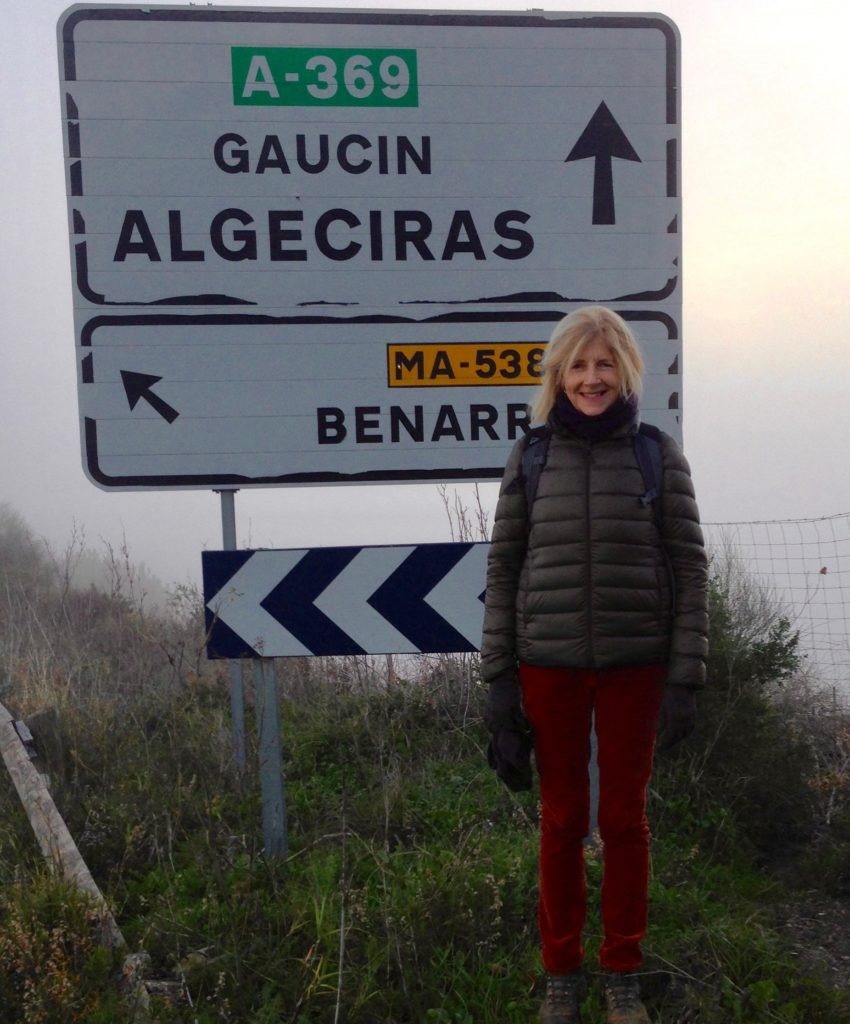
Mary Lawlor is author of a memoir, Fighter Pilot’s Daughter: Growing Up in the Sixties and the Cold War (Bloomsbury 2015) and two books of cultural criticism, Recalling the Wild: Naturalism and the Closing of the American West (Rutgers UP 2000) and Public Native America (Rutgers UP 2006). She studied at the American University in Paris, the University of Maryland, and New York University. She divides her time between Easton, Pennsylvania and Gaucin, Spain. Her novel, The Translators, is set in 12th-century Spain and fictionalizes the experiences of Robert of Ketton, first translator of the Koran into Latin. She hopes to see it out next year. In the meantime, she has started a second novel, The Women’s Hospital, set in 18th-century Spain and inspired by the life story of an Irish woman whose family moved to Cádiz, escaping English oppression in their own country.

You can visit her website at https://www.marylawlor.net/ or connect with her on Twitter or Facebook.


Tuesday, July 17, 2018

Interview with Mary Lawlor, Author of Fighter Pilot's Daughter


Mary Lawlor is author of Fighter Pilot’s Daughter: Growing Up in the Sixties and the Cold War (Rowman & Littlefield paperback 2015); Public Native America: Tribal Self-Representation in Casinos, Museums and Powwows (Rutgers UP, 2006); and Recalling the Wild: Naturalism and the Closing of the American West (Rutgers UP, 2000). She lives in Allentown, PA and Gaucin, Spain.


Thank you so much for this interview, Mary. Can we begin by having you tell us why you wrote your book, Fighter Pilot’s Daughter?

I thought about writing a memoir during the last several years I was teaching at Muhlenberg College. I’d long since gotten used to the fact that I had no place to call home and to not knowing where in the world I belonged, but I felt that writing the story of all the moves my family made would help me better understand my roving girlhood. Therapy, talking to other military kids, and finally settling down in one place helped, but not quite enough. I needed an account, a narrative, of what had happened to me and my sisters during all that shifting around. Our father was away for long periods of time, in very dangerous situations. Our mother was always worried. These weren’t easy things to live with. I felt if I could write out the sequence of moves and try to get back inside the feelings that came with them I might be able to make better sense of what being an Army kid did to and for me.
During my last few semesters at Muhlenberg I taught a course on the literature and film of the Cold War which brought the idea to the foreground. Partly this came from the questions students asked and my efforts to get back inside memory to answer them as clearly as I could. But it was also driven by all those questions I’d lived with for so long. So I sat down one summer and wrote the first sentence. The story kept going, and I didn’t want to stop. Even when it was finished I kept going back into that past. It was a very good experience for me to write the book.

What was it like being a military brat?

Almost every day we saw soldiers doing drills and marching along the roads that ran through the posts where we lived. You could hear ordinance explosions in the distance.

Dark green army school buses picked up my sisters and me and a lot of other kids every day to take us to the Catholic school we attended off post. They would bring us back home and leave us in the housing areas where we all lived. All of us went to the same movie theater, bowling alley, teen center, swimming pool and so forth because there was only one of each.

But the sense of class difference was very strong: enlisted and officer corps families lived in separate housing areas, belonged to different clubs, and tended to socialize separately.

Children were expected to behave very well, and parents were expected to discipline them. So my sisters and I and all the other kids acted and spoke and probably thought as we were supposed to. If you were out of line, your father had to answer for it and could be demoted. Kids knew that. You felt like you had a responsibility to not let your father look bad.
So there was a lot of following the line that was drawn for you, and then knowing who you were in the pecking order.

My sisters and I were close and liked being with each other. That was a good thing because all the moving meant we didn’t have any other friends. At new places we’d meet new people, but soon enough they or we would move and we’d never see each other again. Sometimes we’d write letters but that didn’t usually last very long.

It was in many ways a lonely experience, but it was also very, very interesting. You never knew where you were going next or what the new assignment would be like. New places meant new landscapes, sometimes new languages and totally new things to do. We moved from Alabama to California to Germany and many other places. Although we were strangers, life was always exciting.
Of all the places you lived out of the U.S., what your most memorable and why? What was it like?
Mary: I loved living in Paris during my first year of college. It was my first time away from home; my first chance to make myself someone apart from my intensely close family. And the city was so unbelievably beautiful. It was incredible to be eighteen and have that at my doorstep. I met wonderful young people that winter and spring and the following year. Hemingway called Paris “a moveable feast,” and he was right. To get to live there when you’re young is a great gift that stays with you ever after.

You call yourself a warrior child. Why is that?

Growing up as a dutiful, devout daughter in an Irish Catholic, military family I had my life mapped out in detail for me by my parents, the Church, and the patriotic military culture. When I got to college and met people who had other perspectives and different ideas for the future, I was very amazed and fascinated–by what they said, the books they were reading, and the politics they were involved in. Soon I joined them and had to face the resistance of my family to the changes I was going through. I had to “fight” my parents’ will to bring me back home, so to speak, and think again like they did. It wasn’t easy. The tension between us lasted a long time. I had to fight with myself too, because my parents’ vision and ideology were deeply ingrained in me: just because I was attracted to other peoples’ politics and philosophies I couldn’t simply chuck all the ideals I’d been nurtured by. Those battles and the ambiguities that fueled them raged throughout my late teens and through my twenties. I made peace with my parents before they passed away. I like to think I’ve made a few treaties with myself by now, but new fights do turn up to take the place of the old ones. I struggled for a long time to give up academic writing and start producing the fiction I wanted to write since I was very young. I’ve finally done that but new challenges come with the new kind of writing. I have to keep soldiering on.

Demonstrating during the Viet Nam War was a given being as most of America were enraged we were involved in a war that was killing our young men and women in the military, plus it became something that left a bad taste in our mouths. What was the part you played in the demonstrations? How did your family feel about that?

Yes, fifty-eight thousand Americans died in the Vietnam War, but in 1995 Vietnam released the totals of Vietnamese dead: two million civilians, 1.1 million soldiers of North Vietnam, and (the US estimate) between 200,000 and 250,000 South Vietnamese soldiers. It was a huge nightmare for the Vietnamese people and fueled a raging civil struggle in the US. I was fairly oblivious to the horrors of the war although I should not have been. My father was fighting in it. There was no good reason for me to have been as ignorant as I was of what the war meant, even though much of what my Dad was doing was officially secret. I could have had a better picture of what was going on if I’d taken the trouble to read the newspapers and pay closer attention to the nightly TV news. But I wasn’t interested; and in our family we didn’t talk about these things.

This all changed very soon after I arrived in Paris. New roommates and new friends my age were all talking about the war. Everybody was against it. They were reading political theory and philosophy and spiritual books that helped shape their arguments. I was impressed and influenced by them. In the winter of that year, we met a group of young men who had just come to Paris from Madison, Wisconsin. They were nineteen and twenty years old and had fled the country to avoid the draft. At that time Charles de Gaulle, President of France, was granting political asylum to US resistors. France had its own history in Vietnam, and de Gaulle had reason to sympathiz with the young Americans who did not want to go there to fight and possibly lose their lives. The Madison guys formed a union and got a lot of support from political figures and intellectuals in Paris. I was very moved one night when Jean Paul Sartre, the great philosopher of existentialism, came to one of their meetings and claimed they were all vraiment existenialistes. Their bravery—for all they knew they were never going to be able to go home—was quite startling, and I found myself immensely impressed. I joined them along with other friends in the demonstrations that spring that became know in history as “May ’68.”

After writing your book on your experiences, what was going through your head?

Lots of things were on my mind at that moment. The process of writing it was like an experience in self-therapy. When Fighter Pilot’s Daughter was finished I felt like I knew a lot more about myself and my family than I had before writing it. I worried about whether my sisters would be offended by anything I had written in the book. I sent them the manuscript and told them I’d be interested in their thoughts, but they objected to nothing and in fact were terrifically supportive. I also worried about whether the book would have any appeal to people outside my own family and perhaps some of the military kids I knew. As it turned out the book did rather well and came out in paperback two years later. I’ve had lots of good feedback from people of my generation who told me they recognized themselves and the world in which they grew up in Fighter Pilot’s Daughter.

As soon as I finished writing the book there were business matters I had to think about. I needed to find an agent—that was very much on my mind. It took several months, but I was very happy to sign with Neil Salkind. He placed the book quickly with Rowman and Littlefield, a great publisher to work with. My editors there and the vice president, Jon Sisk, were very helpful.

What’s next for you?

Since Fighter Pilot’s Daughter I’ve been writing fiction. My first novel, The Time Keeper’s Room, is in the hands of an agent in London right now. It’s set in Spain (where I live half the year) and focuses on a young woman who’s half-American, half-Spanish. She’s trying to find her identity and stumbles into a kind of visionary history in interesting, dramatic ways that help her come through many challenges she faces.

At the moment I’m working on another novel, as yet untitled, set in the 12th century, about a monk who walks to Spain from England to learn Arabic so he can read Arab star lore and the wisdom of ancient Greece. He has to dodge the Church, which watches his moves with suspicion and jealousy. I won’t say more, but it’s a combination of literary fiction and thriller.


Monday, January 11, 2016

Interview with Mary Lawlor, Author of Fighter Pilot's Daughter

Mary Lawlor grew up in an Army family during the Cold War. Her father was a decorated fighter pilot who fought in the Pacific during World War II, flew missions in Korea, and did two combat tours in Vietnam. His family followed him from base to base and country to country during his years of service. Every two or three years, Mary, her three sisters, and her mother packed up their household and moved. By the time she graduated from high school, she had attended fourteen different schools. These displacements, plus her father's frequent absences and brief, dramatic returns, were part of the fabric of her childhood, as were the rituals of base life and the adventures of life abroad.

As Mary came of age, tensions between the patriotic, Catholic culture of her upbringing and the values of the sixties counterculture set family life on fire. While attending the American College in Paris, she became involved in the famous student uprisings of May 1968. Facing her father, then posted in Vietnam, across a deep political divide, she fought as he had taught her to for a way of life completely different from his and her mother’s.

Years of turbulence followed. After working in Germany, Spain and Japan, Mary went on to graduate school at NYU, earned a Ph.D. and became a professor of literature and American Studies at Muhlenberg College. She has published three books, Recalling the Wild (Rutgers UP, 2000), Public Native America (Rutgers UP, 2006), and most recently Fighter Pilot’s Daughter: Growing Up in the Sixties and the Cold War (Rowman and Littlefield, September 2013).

She and her husband spend part of each year on a small farm in the mountains of southern Spain.

Visit Mary online at http://www.marylawlor.net/
Connect on Facebook and Twitter
Find out more on Goodreads!

Can you tell us a bit about yourself?

I grew up in an Army family, which meant I moved constantly and still have little sense of home. I have, however, managed to keep two houses in the same two towns for the past many years. One is in Allentown, Pennsylvania, where Muhlenberg College is located; and the other is in Gaucin, Spain. The Gaucin place is small and rustic, but it’s where I enjoy life most. I write and hike and swim there in the summers, and skip the swimming in winter.

I’ve taught American Studies and literature at Muhlenberg for years. My favorite courses have been Native American Literature (I wrote a book about contemporary indigenous museums, powwows & casinos called Public Native America), lit & film of the Cold War, and 19th century American Lit.
My memoir, Fighter Pilot’s Daughter, tells the story of growing up in the Army and daily life during the middle years of Cold War. I’m celebrating that it’s done well enough to have very recently come out in paperback.

Where did you grow up?

Since my father was a military pilot, he was often transferred so he could fly new planes and teach others how to fly them. My mother and three sisters and I followed him from one post to another, packing everything up and then unpacking it in the new house each time. I lived in fourteen different places—from upstate New York to Alabama to California and Germany—by the time I graduated from high school.

What is your fondest childhood memory?

When I was 11 years old, my family moved from Alabama to California. We drove all the way across the country on the southern route, passing through places like Biloxi, Mississippi, El Paso, Texas, and the old Disneyland in Anaheim, California. When we finally arrived at our new home in Monterey, I was overcome by the beauty. Alabama had been an overexposed, strange place to live and the towns we’d passed through on the trip were bland and offered little to attract interest. The Monterey Peninsula was the most beautiful place I’d ever seen. The waves of the Pacific washed up on it, and there were Cyprus trees everywhere along the rocky shore. In the mornings, fog would roll up from the beaches, and you could only see tree tops, bits of road, beach, the roofs of houses. Gradually the fog would thin, and you could see more. It was magical, like the world was slowly appearing for the day. Kids don’t always appreciate landscapes or views, but I was really taken by all this. It stimulated my imagination like nowhere I’d ever been.

When did you begin writing?

I always wanted to be a writer and actually started playing with writing when I was very young, before we moved to California. But once there, my imagination came awake pretty powerfully. I wrote stories and sketches—and I spent a lot of time dreaming up stories I never wrote down. I took a course in creative writing in undergraduate school but set aside fiction-making when I went to graduate school. I studied centuries of English and American literature at NYU, as well as the cultural and political histories that came with it. I wrote a couple of academic books (one about the literature of the American West at the time the frontier was declared closed, and the other, as I mentioned above, was about Native American museums, powwows, and casinos), but it wasn’t until I wrote Fighter Pilot’s Daughter that I managed to break out of academic publishing into more personal and heartfelt writing.

Do you write during the day, at night or whenever you can sneak a few moments?

I usually write in the mornings, as soon as I get a cup of tea made. If I can find an hour or two later in the day, I’ll certainly take it. If writing in the morning doesn’t happen, I’ll try to find time later in the day—even if it’s late at night.

What is this book about?

Fighter Pilot’s Daughter is a narrative of my girlhood years in a Marine Corps and later Army family. It describes the many episodes of our lives on the road and in the many places where we lived. The book gives a close account of our family relations and of the Cold War, Irish-Catholic context of our many households. The climax comes in the late sixties, when I went away to college and began taking a different view of life from that by which my parents had raised me. We came into sharp conflict with each other, and it wasn’t until many years later that we resolved our differences. The book relates those conflicts in detail, and it ends with the story of how we finally came together again as the Cold War ended.

What inspired you to write it?


Because of all the moving, I had a very thin sense of place and this had paradoxically a big influence on my character. The book explains how this is so, but briefly the absence of time spent in any one place left me drifting in the wind as I came out of early childhood and started the long process of trying to figure out who I was and who I might become. Writing Fighter Pilot’s Daughter helped me sort through the memories of all the moving and the experience of being a constant stranger, of never belonging. For years before I started writing this book, I had wanted to sit down with all the records, journals, interviews, letters and photos I had and draft an account of what happened when. I figured seeing the history of my family’s life and my own would be helpful—therapeutic even—in the ongoing process of figuring out who I was. And indeed it has been!

There were also questions of a moral sort that I wanted to think about in writing—questions about what my father did in war and about my own relationship with my parents. Writing the book helped tremendously with this. I learned tons of things about my father, my mother, and myself just by going back into memory, studying the letters and military records, and narrating the story of our shifting, complicated life.

In addition, my students in courses on lit & film of the Cold War were influential. They urged me to write my story, and I was hugely inspired by their encouragement.

Are you a member of a critique group? If no, who provides feedback on your work?

I’m not a member of a critique group. I have a few close friends who I rely on to read my work and give me feedback.

Who is your favorite author?

At the moment, my favorite author is probably David Mitchell (author of The Bone Clocks, Cloud Atlas, Slade House, and several other novels). But I’m a big reader, and my favorite author changes often.

Do you have an agent or are you looking for one?

My agent for Fighter Pilot’s Daughter was Neil Salkind of Salkind Literary/Studio B. He was great and helped me place the book quickly with Rowman and Littlefield.

Where can readers purchase a copy of your book?

My book is available at Amazon, barnesandnoble.com, rowmanlittlefield.com, and other online bookstores as well as in brick and mortar stores.

Do you have a website and/or blog where readers can find out more?

My website is www.marylawlor.net. There’s a lot more information there about Fighter Pilot’s Daughter, including radio interviews, and there are photos, a longer bio, and many photos.

What is the best investment you have made in promoting your book?

The best investment I made for promoting the original hardback edition of Fighter Pilot’s Daughter was to sign up for a virtual book tour with Dorothy Thompson and Pump Up Your Book. The Amazon ratings went up quickly, and the first printing of the book sold out.

What is up next for you?

I’m writing a novel now titled The Time Keeper’s Room. It’s set in southern Spain and features a young woman just starting university who gets very interested in her own family’s deep past. She has visions of figures out of medieval Spain, and these figures enter into her own life in ways that aren’t science-fictional. Her boyfriend comes from a different kind of family from her own, and he too becomes interested in the distant past. The two of them learn a great deal about themselves, their families, and their country’s history by a combination of love in the present and sympathy with the past.