Showing posts with label Cold War. Show all posts
Tuesday, July 17, 2018
Interview with Mary Lawlor, Author of Fighter Pilot's Daughter
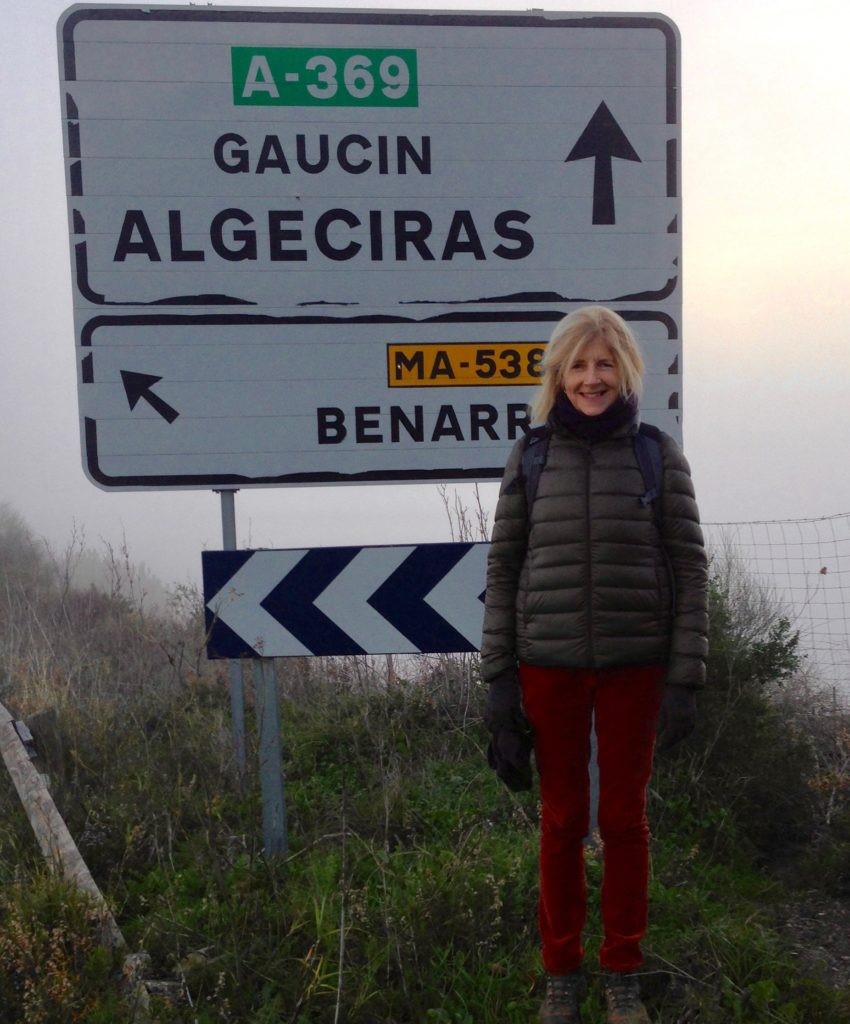
Mary Lawlor is author of Fighter Pilot’s Daughter: Growing Up in the Sixties and the Cold War (Rowman & Littlefield paperback 2015); Public Native America: Tribal Self-Representation in Casinos, Museums and Powwows (Rutgers UP, 2006); and Recalling the Wild: Naturalism and the Closing of the American West (Rutgers UP, 2000). She lives in Allentown, PA and Gaucin, Spain.
Thank you so much for this interview, Mary. Can we begin by having you tell us why you wrote your book, Fighter Pilot’s Daughter?
I thought about writing a memoir during the last several years I was teaching at Muhlenberg College. I’d long since gotten used to the fact that I had no place to call home and to not knowing where in the world I belonged, but I felt that writing the story of all the moves my family made would help me better understand my roving girlhood. Therapy, talking to other military kids, and finally settling down in one place helped, but not quite enough. I needed an account, a narrative, of what had happened to me and my sisters during all that shifting around. Our father was away for long periods of time, in very dangerous situations. Our mother was always worried. These weren’t easy things to live with. I felt if I could write out the sequence of moves and try to get back inside the feelings that came with them I might be able to make better sense of what being an Army kid did to and for me.
During my last few semesters at Muhlenberg I taught a course on the literature and film of the Cold War which brought the idea to the foreground. Partly this came from the questions students asked and my efforts to get back inside memory to answer them as clearly as I could. But it was also driven by all those questions I’d lived with for so long. So I sat down one summer and wrote the first sentence. The story kept going, and I didn’t want to stop. Even when it was finished I kept going back into that past. It was a very good experience for me to write the book.
What was it like being a military brat?
Almost every day we saw soldiers doing drills and marching along the roads that ran through the posts where we lived. You could hear ordinance explosions in the distance.
Dark green army school buses picked up my sisters and me and a lot of other kids every day to take us to the Catholic school we attended off post. They would bring us back home and leave us in the housing areas where we all lived. All of us went to the same movie theater, bowling alley, teen center, swimming pool and so forth because there was only one of each.
But the sense of class difference was very strong: enlisted and officer corps families lived in separate housing areas, belonged to different clubs, and tended to socialize separately.
Children were expected to behave very well, and parents were expected to discipline them. So my sisters and I and all the other kids acted and spoke and probably thought as we were supposed to. If you were out of line, your father had to answer for it and could be demoted. Kids knew that. You felt like you had a responsibility to not let your father look bad.
So there was a lot of following the line that was drawn for you, and then knowing who you were in the pecking order.
My sisters and I were close and liked being with each other. That was a good thing because all the moving meant we didn’t have any other friends. At new places we’d meet new people, but soon enough they or we would move and we’d never see each other again. Sometimes we’d write letters but that didn’t usually last very long.
It was in many ways a lonely experience, but it was also very, very interesting. You never knew where you were going next or what the new assignment would be like. New places meant new landscapes, sometimes new languages and totally new things to do. We moved from Alabama to California to Germany and many other places. Although we were strangers, life was always exciting.
Of all the places you lived out of the U.S., what your most memorable and why? What was it like?
Mary: I loved living in Paris during my first year of college. It was my first time away from home; my first chance to make myself someone apart from my intensely close family. And the city was so unbelievably beautiful. It was incredible to be eighteen and have that at my doorstep. I met wonderful young people that winter and spring and the following year. Hemingway called Paris “a moveable feast,” and he was right. To get to live there when you’re young is a great gift that stays with you ever after.
You call yourself a warrior child. Why is that?
Growing up as a dutiful, devout daughter in an Irish Catholic, military family I had my life mapped out in detail for me by my parents, the Church, and the patriotic military culture. When I got to college and met people who had other perspectives and different ideas for the future, I was very amazed and fascinated–by what they said, the books they were reading, and the politics they were involved in. Soon I joined them and had to face the resistance of my family to the changes I was going through. I had to “fight” my parents’ will to bring me back home, so to speak, and think again like they did. It wasn’t easy. The tension between us lasted a long time. I had to fight with myself too, because my parents’ vision and ideology were deeply ingrained in me: just because I was attracted to other peoples’ politics and philosophies I couldn’t simply chuck all the ideals I’d been nurtured by. Those battles and the ambiguities that fueled them raged throughout my late teens and through my twenties. I made peace with my parents before they passed away. I like to think I’ve made a few treaties with myself by now, but new fights do turn up to take the place of the old ones. I struggled for a long time to give up academic writing and start producing the fiction I wanted to write since I was very young. I’ve finally done that but new challenges come with the new kind of writing. I have to keep soldiering on.
Demonstrating during the Viet Nam War was a given being as most of America were enraged we were involved in a war that was killing our young men and women in the military, plus it became something that left a bad taste in our mouths. What was the part you played in the demonstrations? How did your family feel about that?
Yes, fifty-eight thousand Americans died in the Vietnam War, but in 1995 Vietnam released the totals of Vietnamese dead: two million civilians, 1.1 million soldiers of North Vietnam, and (the US estimate) between 200,000 and 250,000 South Vietnamese soldiers. It was a huge nightmare for the Vietnamese people and fueled a raging civil struggle in the US. I was fairly oblivious to the horrors of the war although I should not have been. My father was fighting in it. There was no good reason for me to have been as ignorant as I was of what the war meant, even though much of what my Dad was doing was officially secret. I could have had a better picture of what was going on if I’d taken the trouble to read the newspapers and pay closer attention to the nightly TV news. But I wasn’t interested; and in our family we didn’t talk about these things.
This all changed very soon after I arrived in Paris. New roommates and new friends my age were all talking about the war. Everybody was against it. They were reading political theory and philosophy and spiritual books that helped shape their arguments. I was impressed and influenced by them. In the winter of that year, we met a group of young men who had just come to Paris from Madison, Wisconsin. They were nineteen and twenty years old and had fled the country to avoid the draft. At that time Charles de Gaulle, President of France, was granting political asylum to US resistors. France had its own history in Vietnam, and de Gaulle had reason to sympathiz with the young Americans who did not want to go there to fight and possibly lose their lives. The Madison guys formed a union and got a lot of support from political figures and intellectuals in Paris. I was very moved one night when Jean Paul Sartre, the great philosopher of existentialism, came to one of their meetings and claimed they were all vraiment existenialistes. Their bravery—for all they knew they were never going to be able to go home—was quite startling, and I found myself immensely impressed. I joined them along with other friends in the demonstrations that spring that became know in history as “May ’68.”
After writing your book on your experiences, what was going through your head?
Lots of things were on my mind at that moment. The process of writing it was like an experience in self-therapy. When Fighter Pilot’s Daughter was finished I felt like I knew a lot more about myself and my family than I had before writing it. I worried about whether my sisters would be offended by anything I had written in the book. I sent them the manuscript and told them I’d be interested in their thoughts, but they objected to nothing and in fact were terrifically supportive. I also worried about whether the book would have any appeal to people outside my own family and perhaps some of the military kids I knew. As it turned out the book did rather well and came out in paperback two years later. I’ve had lots of good feedback from people of my generation who told me they recognized themselves and the world in which they grew up in Fighter Pilot’s Daughter.
As soon as I finished writing the book there were business matters I had to think about. I needed to find an agent—that was very much on my mind. It took several months, but I was very happy to sign with Neil Salkind. He placed the book quickly with Rowman and Littlefield, a great publisher to work with. My editors there and the vice president, Jon Sisk, were very helpful.
What’s next for you?
Since Fighter Pilot’s Daughter I’ve been writing fiction. My first novel, The Time Keeper’s Room, is in the hands of an agent in London right now. It’s set in Spain (where I live half the year) and focuses on a young woman who’s half-American, half-Spanish. She’s trying to find her identity and stumbles into a kind of visionary history in interesting, dramatic ways that help her come through many challenges she faces.
At the moment I’m working on another novel, as yet untitled, set in the 12th century, about a monk who walks to Spain from England to learn Arabic so he can read Arab star lore and the wisdom of ancient Greece. He has to dodge the Church, which watches his moves with suspicion and jealousy. I won’t say more, but it’s a combination of literary fiction and thriller.
Saturday, March 16, 2013
First Chapter Review: Russian Jews Don't Cry by Uri Norwich
Russian Jews Don't Cry is realistic fiction from Uri Norwich, who used his own experiences to create a narrative fiction piece.
BLURB: Border patrol officer stamped my Exit Visa with a big blue stamp: "Released!" Indeed, I was released from the most Evil Empire. I was released from the slavery. I was released into the free World, stateless, penniless but free — the sweetest release of them all! I didn’t care at that moment about tomorrow. I didn’t care that I only had eighty dollars to my name, some clothes on my back, and couple of suitcases. One thing I knew for sure I would never be a slave again.
If reality can turn into bizarre fantasy, and the fantasy can morph back into reality, then a twilight transition may exist somewhere on the way. This is where reside rare and virtually unknown slices of life of the Soviet Union, Israel, Italy, and the last wave of the Soviet immigration, seen through the prism of one young man's imagination. Displaced from the far reaches of Siberia, forced to roll through continents and countries, and suspended in time and space, a man's quest for emerging from that twilight never stopped. This book will unveil many colors and smells of places in the worlds sometimes laying in plain view, but go unnoticed. The characters depicted may seem fictional at times, but their surroundings are quite real. Some may even try tracing the steps laid out in the book. It is all out there still... Author lives in a New York City suburb, still enjoying every moment of novelty being a free man, even after so many years.
COVER: This cover captures many elements of the book. It's a bit busy, but still appeals to the eye.
FIRST CHAPTER: This highly narrative first chapter, opens with the unnamed main character on a long flight from Beijing back to New York. The rest that follows is the backstory of release jis from the Soviet Union on an Exit Visa.
KEEP READING: Hard to say. There is a great deal of potential in Russian Jews Don't Cry. By molding his experiences into a fictional story, Norwich provides a fabulous perspective on life in the Soviet Union while the Cold War was still raging. Historical photographs add a nice touch to the narrative, helping the reader visualize unfamiliar objects and places. In depth descriptions complement the photos, creating a vivid picture for the reader.
Part of me wonders why the author didn't opt to tell his story as a memoir. A story of his personal experiences as a Russian Jew relocating to New York and trying to find his place in a free society could be appealing to many--myself included. As realistic fiction, the reader is left to wonder how much of the narrative is true and how much is fictionalized. That's not the reason I am on the fence about whether to continue reading, though. When English isn't your native language, it's important to hire an editor to pick up grammatical errors. That does not appear to be done here. Missing words and words used incorrectly plague the prologue and first chapter. It makes for a jarring read. The excessive use of the verb "to be" creates a passive narrative, which doesn't do the story justice.
I must state again that I see tremendous potential for this man's story. The help of a good editor should turn this into a powerful story.
File Size: 1685 KB
Print Length: 688 pages
Publisher: Uri Norwich; 2 edition (January 8, 2013)
Sold by: Amazon Digital Services, Inc.
Language: English
ASIN: B008JQME92
I received the first chapter of this book from the author. This review contains my honest opinions, for which I have not been compensated in any way.
Monday, April 19, 2010
The Literary Face of the Secret Cold War by T.H.E. Hill, Author of Voices Under Berlin
Today's guest blogger is T.H.E. Hill, author of the award-winning spy novel, Voices Under Berlin: The Tale Of A Monterey Mary
A spy novel about the Americans who ran the pre-wall Berlin Spy Tunnel that the CIA used to tap Russian telecommunications cables, and about the Russians whom they were intercepting. The novel is ostensibly set against the backdrop of the Berlin Spy Tunnel (Operation GOLD, covername: PBJOINTLY). The yarn is told from both ends of the tunnel. One end is the story of the Americans who worked the tunnel, and how they fought for a sense of purpose against boredom and the enemy both within and without. This side of the story is told with a pace and a black humor reminiscent of that used by Joseph Heller (Catch-22) and Richard Hooker (M*A*S*H*). The other end of the tunnel is the story of the Russians whose telephone calls the Americans are intercepting. Their end of the tale is told in the unnarrated transcripts of their calls. They are the voices under Berlin. Voices Under Berlin is the proud winner of 5 Book Awards: PODBRAM Best Historical Concept, “Puss Reboots” book blog Top 10 Books for 2009, Hollywood Book Festival, Branson Stars & Flags Book Award and Military Writers’ Society Book of the Month.
"The Literary Face of the Secret Cold War" by T.H.E. Hill
I have written all my adult life, and one of the things that I discovered in doing this was that the act of putting words on paper, whether they are to be read by another human being or not, helps to focus the mind on the essence of what little knowledge you may, or may not possess. Voices Under Berlin: The Tale of a Monterey Mary is the result of the distillation of the knowledge I gained during the Secret Cold War.
War novels have a prominent place in Literature. War is a time that tests the metal of people's souls, and the process of passing through that crucible has inclined more than a few people to write about their experiences. The fiction of war is more the search for sweeping truths of global breadth than for precise details of an action that ignores the processes that take place in people's minds. The pseudo-reality of fiction seeks to subsume the individual factual realities of the many. This literary distillation process, however, can take a long time. The reason for this is that a novelist needs more time to separate the literary truth from the factual chaff than a memoirist, whose task is more descriptive than analytical.
William Brinkley's Don't Go Near the Water, a novel of war in the South Pacific, took eleven years to distill. It was not published until 1956, yet its impact was not diminished by that time lapse. It was the bestselling work of American fiction that year.
The distillation process was a bit faster in Germany, where the first of the Gunner Asch trilogy by Hans Hellmut Kirst was published in 1954, only nine years after the collapse of Nazi Germany.
The black humor of Joseph Heller's satirical novel of the Air War in Europe, Catch-22, is set in the final stages of World War II, yet it was not published until 1961, 16 years after hostilities ceased. It is often considered one of the great works of twentieth-century American literature, and its title has become a household word.
The literary essence of the Korean War (1950-1953) had to wait 15 years for Richard Hooker to publish MASH: A Novel About Three Army Doctors, about a Mobile Army Surgical Hospital near the front lines during the Korean War in 1968.
The Vietnam War (1959-1975) likewise took 15 years to distill into Tim O'Brien's The Things They Carried.
Voices Under Berlin took 17 years to reach publication after the end of the Cold War (1945-1991).
The Cold War and I grew up together. I was born during the Berlin Airlift (1948-1949), and came of age inside the confines of the Berlin Wall. I was a direct participant in some events, and an indirect participant in others. The Russian invasions of Czechoslovakia and of Afghanistan; the rise of the Solidarity Movement in Poland. I saw Havel and Dubcek raise their clasped hands in victory on a balcony overlooking Wenceslas Square in Prague in 1989. That same year I watched in awe as the East Germans cowed the border guards into opening the wall by chanting “Wir sind das Volk!” (We are the People!)
Alas, poor Cold War. I knew it well. It was a war of infinite jest and most excellent fancy, fought more often in the shadows of the mind than to the death, yet the lives of millions hung in the balance. It is a war without monuments, but not without casualties. 136 people were confirmed killed while trying to cross the Berlin Wall into West Berlin. Major Arthur D. Nicholson, the last casualty of the Cold War, was a classmate. That makes it very personal.
In all the years that I and others like me fought the Secret Cold War, it was under the banner of “Peace is our most important product.” That was our motto, because the alternative was unthinkable. We accomplished our mission. The Iron Curtain came down without the Cold War turning hot.
On a recent visit to Berlin, we met an old German couple, who, when they discovered that I am an American, thanked me for the food and coal brought in on the Airlift that kept them and their newborn son alive that very cold winter, and for keeping them out of the clutches of the Russians. They also apologized that the younger generation has forgotten those things, and does not like America anymore.
A friend who still teaches Russian at DLIWC put their apology into perspective when he pointed out that almost all his students these days were born after the Berlin Wall fell in 1989. The Cold War is history to his students, but not to me. The Cold War and I grew up together.
The realities of the War, any war, are best explored in fiction rather than in the objective presentation of precise facts that make up the non-fiction books on the war. While Voices Under Berlin is "a work of fiction," the truth is not being stretched as far as those who have not lived the life described in it might suspect. It might not be exactly the way that someone else lived the Secret Cold War, but it is close enough so that people who fought the Secret Cold War in places other than Berlin say that they felt right at home while reading it. This is, perhaps, best illustrated by a post from a soldier who is currently fighting the Secret War in the mid-East. In a post on the Military.com Discussion Boards, he said "I thought it was hilarious how some of the SIGINT/linguist jokes and eccentricities have virtually remained unchanged in sixty years . . . I can assure you the same situations are being played out in Iraq and Afghanistan as I type this. :-) I encourage anyone currently in SIGINT to read up on this stuff. It will make you smile a bit knowing that people have been going through the same crap you did as a SIGINTer for the past 60 years!"
I wrote Voices Under Berlin, because I wanted to record what it was like to fight the Secret Cold war for posterity. When their children ask "What did you do in the Cold War?", most Secret Cold War veterans, have to say something trite, like "If I told you, I'd have to shoot you." I wanted to give voice to some of their stories so that they would not disappear when the generations of generations of Secret Cold Warriors who are sworn to silence shuffle off this mortal coil. I wanted Secret Cold War vets to be able to answer their children and grandchildren with: "I can't tell you exactly, but why don't you read Voices Under Berlin?" Many of them have.

T.H.E. Hill, the author of Voices Under Berlin: The Tale of a Monterey Mary, served with the U.S. Army Security Agency at Field Station Berlin in the mid-1970s, after a tour at Herzo Base in the late 1960s. He is a three-time graduate of the Defense Language Institute (DLIWC) in Monterey, California, the alumni of which are called "Monterey Marys". The Army taught him to speak Russian, Polish, and Czech; three tours in Germany taught him to speak German, and his wife taught him to speak Dutch. He has been a writer his entire adult life, but now retired from Federal Service, he writes what he wants, instead of the things that others tasked him to write while he was still working.
You can learn more about T.H.E. Hill and his books at www.VoicesUnderBerlin.com.
Read the Reviews!
The setting for this deftly written spy novel is divided city Berlin during the height of the 1950s Cold War. What sets “Voices Under Berlin” apart from so many others of similar venue is not just the focus on the American military linguistics resources and personnel, including cryptographers and intelligence analysts, but also the author’s combining a genuine gift for humor with a deft literary astuteness in telling a story that fully engages the reader quite literally from first page to last. Simply stated, “Voices Under Berlin” is a terrifically entertaining 312-page read and an enthusiastically recommended addition to community library collections and personal leisure time reading lists.
– Midwest Book Review
It’s not often, these days, to get the news that a spy novel has earned a prestigious award. But Voices Under Berlin, a comic novel by T.H.E. Hill, about the goings-on around the Berlin Tunnel in the early 1950s, was among the award winners at the 2008 Hollywood Book Festival. . . . We cannot recommend the book more strongly, and will be pleased to help promote this outstanding contribution to insightful and original espionage humor.
–Dr. Wesley Britton, author of Spy Television, Beyond Bond: Spies in Fiction and Film, and Onscreen and Undercover: The Ultimate Book of Movie Espionage
I thoroughly enjoyed Voices Under Berlin and I feel it holds up to its promise to be akin to M*A*S*H* and Catch-22. It’s one of the funniest books I’ve been sent for review.
–Puss Reboots
Follow T.H.E. Hill's virtual book tour all month long by visiting http://virtualbooktours.wordpress.com/
Subscribe to:
Posts (Atom)


