Showing posts with label Rose Wilder Lane. Show all posts

Monday, February 3, 2025

New Arrivals Through Today

 So excited that all my new titles from ThriftBooks.com arrived. Check them out.


The friendship between Dorothy Thompson and Rose Wilder Lane began in 1920 in the publicity office of the American Red Cross in Paris and continued until Thompson's death in 1961. Although both women are today remembered primarily for their connections with others --Thompson as the wife of Sinclair Lewis, and Lane as the daughter of Laura Ingalls Wilder, author of the 'Little House' books --each was remarkable in her own right. Both women had a vital engagement with life that led them in fearless pursuit of experience. In 1939, Thompson appeared on the cover of Time, which judged her second only to Eleanor Roosevelt among influential women of the day. Typical of Lane were her travels through the mountains of Albania, the deserts of Syria, and Soviet Georgia in the 1920s and her visit as a journalist to Vietnam in 1965 at the age of seventy-eight. The correspondence of these two talented and articulate women reveals their personal concerns, social ideas, and political/economic philosophies and how they changed over time. Their letters tell the story of the first generation of women to come of age during the twentieth century, as they tried to cope with problems that women still face today. Along with the letters themselves, Holtz has included annotations and footnotes that provide biographical information, as well as explaining personal and topical references. This description may be from another edition of this product.


In the 1880s, when adventure lay in the conquest of the prairies, David Beaton and his bride came to Dakota to claim three hundred acres of grassland. Rose Wilder Lane tells of their struggle to survive with such force that Free Land has become a classic frontier novel. The young couple experiences cyclones, droughts, and blizzards that isolate them for days in their sod shanty and endanger their livestock. The simple pleasures of home cooking, horse trading, and socializing interrupt work, here described in its wealth of variety. In every detail, Free Land comes to life because Lane grew up in the time and place of which she writes. The book embodies her belief that "living is never easy, that all human history is a record of achievement in disaster, and that our great asset is the valor of the American spirit."

Like the Beatons of this novel, Rose Wilder Lane's parents homesteaded in Dakota. Lane was a successful novelist and journalist when, in the 1930s, she encouraged and helped her mother, Laura Ingalls Wilder, to write the Little House on the Prairie books that were later dramatized for television.
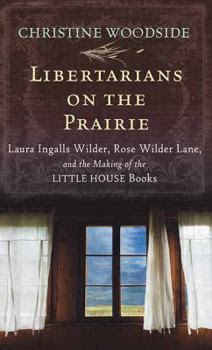

This myth-busting book finally reveals the true story behind the beloved children's classics. Generations of children have fallen in love with the pioneer saga of the Ingalls family, of Pa and Ma, Laura and her sisters, and their loyal dog, Jack. Laura Ingalls Wilder's Little House books have taught millions of Americans about frontier life, giving inspiration to many and in the process becoming icons of our national identity. Yet few realize that this cherished bestselling series wandered far from the actual history of the Ingalls family and from what Laura herself understood to be central truths about pioneer life. In this groundbreaking narrative of literary detection, Christine Woodside reveals for the first time the full extent of the collaboration between Laura and her daughter, Rose Wilder Lane. Rose hated farming and fled the family homestead as an adolescent, eventually becoming a nationally prominent magazine writer, biographer of Herbert Hoover, and successful novelist, who shared the political values of Ayn Rand and became mentor to Roger Lea MacBride, the second Libertarian presidential candidate. Drawing on original manuscripts and letters, Woodside shows how Rose reshaped her mother's story into a series of heroic tales that rebutted the policies of the New Deal. Their secret collaboration would lead in time to their estrangement. A fascinating look at the relationship between two strong-willed women, Libertarians on the Prairie is also the deconstruction of an American myth. 
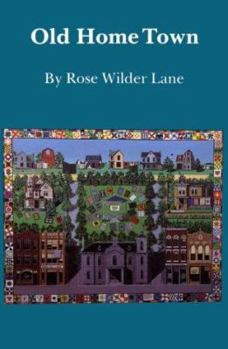

In Old Home Town, Rose Wilder Lane has recreated small-town society of pre-World War I America with a precise feeling for decorum, dress, and kitchen dialogue. Like Sherwood Anderson in Winesburg, Ohio, she describes a community through the stories of certain memorable citizens. The overlay of nostalgia cannot hide some sharp observations about marriage and women's rights.


Newlyweds Molly and David are only sixteen and eighteen years old when they pack up their wagon and head west across the plains in search of a new homestead. At first their new life is full of promise: The wheat is high, the dugout is warm and cozy, and a new baby is born to share in their happiness. Then disaster strikes, and David must go east for the winter to find work. Molly is left alone with the baby--with nothing but her own courage to face the dangers of the harsh prairie winter.
One of my good friends, who has since passed away, did not like when I began reading material that attempted to dismantle the idea that Laura Ingalls Wilder was the sole writer and editor of her Little House books. William Holtz, editor of Dorothy Thompson & Rose Wilder Lane: Forty Years of Friendship, Letters, 1921-1960, also wrote The Ghost in the Little House. The latter is Holtz's biography of Rose Wilder Lane, and he asserts that she should be credited as a co-author of the Little House books.

Ultimately, we all must judge for ourselves how we feel about Wilder and Lane's collaboration. When I began my Laura's Little Houses blog, the first book I read was The Ghost in the Little House, followed by Free Land and Let the Hurricane Roar/Young Pioneers. That left me with the opinion that while Lane may have heavily edited her mother's books, Wilder is the lone author. I doubt Libertarians on the Prairie will alter that opinion, but I also enjoy exploring different points of view and theories. As I read through these books again, my Laura's Little Houses blog is probably where most of the discussion will take place, though more typical reviews should appear here. 


Tuesday, January 27, 2015

Win a Free Paperback of Pioneer Girl by Bich Minh Nguyen


You've heard me talk twice this week about how much I loved this book. Now, you have a chance to win a free copy of the paperback version, which was released today. Here is the official description:

In Pioneer Girl, Nguyen entwines the Asian American experience with the escapist pleasures of literature, in a dazzling mystery about the origins of Laura Ingalls Wilder’s classic Little House on the Prairie.

Lee Lien has long dodged her Vietnamese family’s rigid expectations by immersing herself in books. But now, jobless with a PhD in literature, she is back at home, working in her family’s restaurant under her mother’s hypercritical gaze—until an heirloom from their past sends Lee on a search for clues that may lead back to Wilder herself, transforming strangers’ lives as well as her own.

You can read my review of this book here.

TERMS AND CONDITIONS:


  • You must be 18 years of age or older.
  • Winner must be a resident of the United States.
  • Contest runs from 12:00 AM EST on 1/27/15 to 12:00 AM EST on 2/7/15.
  • Winner will be announced on 2/9/15 and have 48 hours to respond with mailing address before a new winner is selected.
  • The Book Connection is not responsible for items lost or damaged in shipment.
  • VOID WHERE PROHIBITED.

a Rafflecopter giveaway

Wednesday, March 5, 2014

Book Review Excerpt: Pioneer Girl by Bich Minh Nguyen

A fascinating novel of family and culture mingled with mystery and bound to the story of an American icon is what you'll find in Pioneer Girl by Bich Minh Nguyen.

After obtaining her PhD in American literature, a jobless Lee Lien finds herself heading home to the Chicago suburbs to work in her mother and grandfather's café. Before long, Lee's tense relationship with her overbearing mother leaves her hoping to break away from a life she always seems drawn back to. When her older brother comes home only to quickly disappear again, he leaves behind a gold-leaf brooch from their mother's past in Vietnam that stirs up the forgotten childhood dream of an American reporter who visited her grandfather's original café in Saigon in 1965. Based upon a passage from the Little House books, Lee is convinced the reporter must have been Rose Wilder Lane, daughter of Laura Ingalls Wilder. Could this pin link her family to one of America's most famous pioneering legacies?

To read my entire review, please visit http://lauralittlehouseontheprairie.blogspot.com/2014/03/book-review-pioneer-girl-by-bich-minh.html

Monday, January 13, 2014

Musing Mondays - January 13th


Musing Mondays is changing it up, for this week!

Question: Are “best” and “favorite” the same thing? If someone asked you “What’s the best book you ever read?” would the answer be the same as for “What’s your favorite?” {source}


My Musing: I say that "best" and "favorite" can be, but aren't always, the same thing. I have lots of favorite books--I try to share them at the end of each year (you can see my 2013 list here). But there are very few I would say are the "best." The Stand by Stephen King comes to mind in the "best" category.

This is the original post I scheduled to run for today based upon past Musing Mondays:

Musing Mondays asks you to muse about one of the following each week…

• Describe one of your reading habits.
• Tell us what book(s) you recently bought for yourself or someone else, and why you chose that/those book(s).
• What book are you currently desperate to get your hands on? Tell us about it!
• Tell us what you’re reading right now — what you think of it, so far; why you chose it; what you are (or, aren’t) enjoying it.
• Do you have a bookish rant? Something about books or reading (or the industry) that gets your ire up? Share it with us!
• Instead of the above questions, maybe you just want to ramble on about something else pertaining to books — let’s hear it, then!

My Musing:

You know what I really love to do--and I don't get a chance to do it very often--is dissect titles and really discuss them. I first started blogging because I wanted to get back into a regular reading schedule, but there was a reason behind that: I had some great books waiting to be read and there was a purpose to reading them.

I mentioned last week that the first post here was part one of five discussing The Ghost in the Little House by William Holtz. This book is a biography of Laura and Almanzo Wilder's only child who survived to adulthood, Rose Wilder Lane. The author's contention is that Lane should be listed as a co-author for Wilder's beloved Little House books. As a fan of the books, I wasn't sure how I would feel about The Ghost in the Little House, but I knew I didn't want to just read it and cross it off my "TBR list."

The book is close to 450 pages long, and I wanted to see if by the end of it, I felt the same way the author did about Lane's contributions to her mother's now classic books. I can't say that I did agree, but The Ghost in the Little House led me to read books by Lane to either support or discredit Holtz's theory--at least in my mind.

I discussed at length, Lane's Free Land and Let the Hurricane Roar. I didn't end up going further on with this search, but when I decided to start reading some Laura Ingalls Wilder titles I had on my bookshelf for a while, I ended up writing this multi-part discussion on Little House, Long Shadow: Laura Ingalls Wilder's Impact on American Culture by Anita Clair Fellman, which started with this post. I've read the first five chapters of the book, but needed to break away until now. I should be finished with this book soon.

Books that make me think are perfect to dive into and discuss at length. My hope is always that others will join in the discussion. Having read nonfiction exclusively for many years before I began blogging, I got into the habit of considering my thoughts and feelings on certain topics or bodies of work. That's probably why I enjoy reviewing books so much.

Have you ever read a book with a definitive purpose in mind? Do you enjoy discussing books at length?

Thursday, August 8, 2013

First Chapter Review: A Wilder Rose by Susan Wittig Albert


When I learned about A Wilder Rose by Susan Witting Albert, I downloaded a version of the book from NetGalley to my Kindle. I've been a Laura Ingalls Wilder fan since childhood. Not much has been written about Laura and her daughter Rose Wilder Lane's relationship. The Ghost in the Little House is the most comprehensive biography on Lane I've found.

I actually missed that Albert's book is a novel based upon Lane's unpublished diaries and Wilder's letters when I opted to download it. Though the word appears in the NetGalley description and the official description from the author's website, it also states this is the "true" story of Lane and gets to the "heart of this fascinating literary mystery," which was the secret collaboration between Lane and her mother to produce the Little House books.

BLURB:  In 1928, Rose Wilder Lane—world traveler, journalist, much-published magazine writer—returned from an Albanian sojourn to her parents’ Ozark farm. Almanzo Wilder was 71, Laura 61, and Rose felt obligated to stay and help. To make life easier, she built them a new home, while she and Helen Boylston transformed the farmhouse into a rural writing retreat and filled it with visiting New Yorkers. Rose sold magazine stories to pay the bills for both households, and despite the subterranean tension between mother and daughter, life seemed good.

Then came the Crash. Rose’s money vanished, the magazine market dried up, and the Depression darkened the nation. That’s when Laura wrote her autobiography, “Pioneer Girl,” the story of growing up in the Big Woods of Wisconsin, on the Kansas prairie, and by the shores of Silver Lake. The rest—the eight remarkable books that followed—is literary history.

But it isn’t the history we thought we knew. For the surprising truth is that Laura’s stories were publishable only with Rose’s expert rewriting. Based on Rose’s unpublished diaries and Laura’s letters, A Wilder Rose tells the true story of the decade-long, intensive, and often troubled collaboration that produced the Little House books—the collaboration that Rose and Laura deliberately hid from their agent, editors, reviewers, and readers.

Why did the two women conceal their writing partnership? What made them commit what amounts to one of the longest-running deceptions in American literature? And what happened in those years to change Rose from a left-leaning liberal to a passionate Libertarian?

In this impeccably researched novel and with a deep insight into the book-writing business gained from her own experience as an author and coauthor, Susan Wittig Albert follows the clues that take us straight to the heart of this fascinating literary mystery.

COVER: Absolutely beautiful. The Rocky Ridge Farm image, the colorful rose, and the perfect colored text make this an attractive cover. Kudos to this designer.

FIRST CHAPTER: After an author's note that sets the tone for this novel, the reader finds herself in the kitchen of Rose Wilder Lane's Danbury, Connecticut home on King Street. It's April 1939, and Rose has just completed a letter that commits her to finishing the rewrite of By the Shores of Silver Lake. 

Her close friends, Norma Lee and her husband Russell Ogg, are staying for an extended visit. Norma Lee begs Rose to tell her the story of how she became involved in helping her mother with her children's series and why she's done it. With much prodding and a desire to understand it all herself, Rose agrees.

KEEP READING:  My fascination with Wilder means I'll finish the book, no matter how I personally feel about the angle it is taking. Unfortunately, just like Holtz did with Ghost in the Little House, Albert must portray Wilder as an unskilled writer in order to prove that Lane should be listed as co-author of the series. I'm also curious why this is written as a novel instead of as a piece of non-fiction. Perhaps it's because Holtz already approached it that way and because this allowed the author more freedom to explore the events within the scope of her own imagination. She does mention expanding and dramatizing storylines in her author's note.

I'm afraid I am a bit biased on this one, because I have enjoyed the work of Melanie Benjamin, who fictionalized the real lives of the Alice Liddell Hargreaves (the basis of Alice from Alice in Wonderland), Mercy Lavinia "Vinnie" Bump (Mrs. Tom Thumb), and Charles Lindbergh's wife, Anne Morrow, but am struggling with A Wilder Rose. Perhaps it's because I didn't know these real people as well as I've come to know the life of Laura Ingalls Wilder. Or maybe, I'm still holding out hope that an author can shed light on Lane and Wilder's collaboration without needing to decimate Wilder's reputation.


Hardcover ISBN: 9780989203517
Trade paperback ISBN: 978-0-9892035-0-0
Release date: October 1, 2013

I downloaded this digital book from NetGalley. This review contains my honest opinions, which I have not been compensated for in any way.


Wednesday, July 11, 2007

Let the Hurricane Roar by Rose Wilder Lane - Comments

As I mentioned a while back, I requested a copy of Rose Wilder Lane's Let the Hurricane Roar from a neighboring library. I wasn't sure what to expect after not being overly thrilled with Rose's story about the Beatons.

Let the Hurricane Roar tells the story of newlyweds Charles and Caroline who leave their home in the Big Woods and settle in a sod house on Plum Creek. Anyone familiar with the history of Laura Ingalls Wilder knows Charles and Caroline were Rose's maternal grandparents. But Rose does not give her main characters a last name, though she did give one to all the other characters.

There is Mr. and Mrs. Svenson who are Charles and Caroline's closest neighbors, and Loftus, to whom Charles owes a large debt after the grasshoppers come and destroy his wheat crop. Mr. and Mrs. Henderson own a store in town and Mrs. Decker is the wife of the saloon keeper. With the exception of the Svenson's, the other characters are mentioned only in brief moments, but they have last names, unlike Charles and Caroline and their son, Charles John who is born in the sod shanty.

Why is important? Maybe it's not, but in Holtz's book The Ghost in the Little House the author mentioned an incident between Rose and her mother that might have been part of the reason for the exclusion. Not that I can find the page right now--if I do, I'll add it here--but during one of Rose's stays at Rocky Ridge Farm, she was explaining her latest story to a group of friends who were also staying on the farm and Laura told her she got it all wrong because she knew it was the story of Charles and Caroline Ingalls. Holtz mentions that perhaps Laura felt Rose should not use Ma and Pa as the basis for her story because Laura was writing her own stories where Ma and Pa were important characters and she felt protective of those memories.

By not giving Charles and Caroline a last name in Let the Hurricane Roar, Rose could have been protecting herself and her story, or maybe she even made a deal with her mother to not add the last names so there would be no direct connection. But, we might never know for sure.

Moving on, people who have studied the real lives of the Ingalls family will notice right away that there is a good deal of fiction in this novel. Charles and Caroline Ingalls did not leave the Big Woods by themselves, Mary and Laura were young girls when they left Wisconsin, and their son never made it out of infancy.

We know from Laura's books and other biographies of the Ingalls family that the grasshoppers did come and destroy every green thing on the prairie and that Charles was forced to find work to support his family. But other than that, the events in Let the Hurricane Roar don't seem very similiar to what I've read of the Ingalls family history.

Let the Hurricane Roar was much shorter than Free Land, but that wasn't the main reason I was able to polish it off within three days. This story held my attention from beginning to end. It didn't start off with a young, happy couple who were optimistic about the future and then turn into a tale of despair and hardship against insurmountable odds. Even with all the challenges Charles and Caroline faced, they approached each new page in their lives with a positive outlook. Sometimes it was hard to do--Caroline and Charles were both lonely when they were apart, Caroline was forced to make tough decisions when Charles was back East working, Charles's return home was delayed by an injury and Caroline and the baby had to survive the winter alone after the Svensons gave up and returned to Minnesota--but they were determined to make it work.

Let the Hurricane Roar could easily be compared to one of Laura's books--some of the content, the tone, and the song lyrics remind me of the Little House series. There is, of course, one exception to that rule--The First Four Years. This manuscript was not published in Laura's or Rose's lifetime. In this book, Laura tells us about her first four years of marriage to Almanzo, the birth of Rose, the loss of their home to fire, and the death of their son who hadn't even been given a name yet. It was a trying time for Laura and Almanzo and the tone of this book is very different from the other eight books she had written about her life.

Rose had sent this manuscript to Roger Lea McBride, who would eventually become her heir. It was McBride who took the manuscript to Harper & Row after Rose's death. A decision was reached to publish the manuscript as Laura had written it.

Yet, if one were to compare the tone of The First Four Years to Free Land they might see the same smiliarities I do when I compare Let the Hurricane Roar to the rest of Laura's books. But, since Rose did not touch Laura's manuscript of The First Four Years we might think the similarities are coincidence.

Where does that leave us? I'm sure there are more than the two options I am listing here, but these are the ones I will concentrate on. Rose could have taken eight of Laura's manuscripts, performed heavy editing on them--rewriting entire portions--and even coordinated getting the manuscripts to the publisher. She could deserve to be listed as co-author of these eight books because they wouldn't have sold without her. But what about The First Four Years? Rose never touched it and amazingly this manuscript and Rose's own Free Land are similiar in tone and style.

There is also a thought traveling through my mind, however, that perhaps the similiarties between Rose's Let the Hurricane Roar and the first eight books of the Little House series, and those found between Free Land and The First Four Years could be chalked up to something not as controversial. Rose grew up in Laura's house, where her mother shared many of the stories she had heard growing up. Perhaps, Rose's and Laura's writing styles were not so disimilar overall. If I did not see such a clear connection with the way Free Land and The First Four Years are written, then this theory would not hold water. But, I do see that connection, and Rose never touched the final manuscript her mother had written.

So, what's next? Well, Old Town Home is a collection of stories by Rose Wilder Lane. I need to read more of Rose's writing to see how the storyteller in her, interacts with the reader. I have multiple books with Laura Ingalls Wilder collections in them, so it will be interesting to see if my second theory has any merit.

I guess that means more reading for me and more blog posts for you. LOL!

Free Land by Rose Wilder Lane - Final Comments

I enjoyed the last few chapters of Free Land more than any other portion of the book. David and Mary Beaton welcome their second child, David buys a herd of sheep from a widowed woman who is going back east, and the Beatons are visited by David's parents for the first time since they moved west.

The hope for the future--which was missing for most of the book--returns in the final chapters, making me want to keep reading. I'm never sure, if I enjoy a story ending which ties up every loose end or one that leaves the reader thinking of what is in store for the characters after the last words are written. While Rose left the future up in the air for the Beatons, I felt it ended in the appropriate place. James Beaton makes a decision which ideally will help David prosper.

But we don't know what happens with David and Mary after that. Does David lose his flock to disease or does he becoming a successful sheep herder? Are David and Mary able to become wealthy enough to live in the same style they were accustomed to when they lived back east or do they lose everything? Or, do they end up prospering so greatly that they surpass even the wealth they once knew?

The possibilities for what happened to the Beatons are endless...just like all our futures. And it is fascinating to toss these ideas around in my head and think of stories left untold.

Free Land by Rose Wilder Lane - More Comments

I have less than fifty pages left to read of Free Land. There have been parts that were so interesting I stayed up too late to read them, but most of the book hasn't drawn my interest. Maybe it's because the story is a bit familiar in spots--not unlike Rose's mother's stories. Maybe it could be the lack of optimism in the main characters or how the Beaton's marriage has been adversely affected by trying to make it on their own in a somewhat unsettled territory.

The lengthy descriptions which I enjoyed reading in the Anne of Green Gables books by Lucy Maud Montgomery, bore me to death in Free Land. I can't exactly pinpoint why. It certainly doesn't seem to make sense; unless I chalk it up to the fact that Montgomery was describing the beauty of the Canadian countryside, whereas Lane is typically describing the difficulties the Beatons experience in living and farming under harsh conditions--raging blizzards, scorching heat, droughts.

But still, I must read it to the end so that I can figure out what happens.

I wonder too, if Laura Ingalls Wilder had written her books for an adult market instead of for children--would I enjoy them as much as I do? It truly seems that the one major element missing between Rose's book and her mother's is that undying optimism which the young narrator of the Little House books portrays through words and actions.

Last night I ordered Let the Hurricane Roar from a local library. I'm curious to see how Rose portrays this story which is supposedly based upon the life of Charles and Caroline Ingalls. I believe I can get a more complete picture of Rose as a writer if I read as many of her books as I can find.

I love this kind of research!

Connecting Free Land and The Long Winter

A strange thing happened to me last night as I sat in the tub reading Free Land. I actually thought for several pages I was reading Laura Ingalls Wilder's The Long Winter. While the names and some of the events were portrayed differently, there were many of the same details Laura had spoken of in her novel.

It was freaky to hear of David Beaton and his friends the Peters family--who he lived with during that hard winter--hauling hay from claim shanties, twisting the hay for fuel, hovering around the stove for warmth as the blizzards raged outside, constantly grinding seed wheat in the coffee mill, and even making a lamp made from a rag dipped in axle grease. All of these things happen in The Long Winter within the Ingalls' house.

Now, we writers know that ideas are a dime a dozen and that there are no patents on them, but in The Ghost in the Little House, Holtz claimed Laura may have had a problem with Rose using what Mama Bess saw as "her" material. So, I find it odd that Rose would use this part of family history and publish it in 1938, while Laura was working on her own books and The Long Winter was published in 1940.

I can't imagine that readers at the time didn't make some kind of connection between the two--maybe they did. Granted, the Hard Winter is only part of Free Land, whereas Laura's book is entirely focused on that one winter and the hardships the town endured.

One good thing about Rose using this material--I was able to get all the way up to page 171 in Free Land because I liked the story.

Look for more comments about Free Land as I read through to the end.

Free Land by Rose Wilder Lane - Initial Comments

I snagged a copy of Free Land by Rose Wilder Lane from the Worcester Public Library. I thought it might help me to figure out how I felt about Holtz's claims in The Ghost in the Little House and the amount of Rose's involvement in her mother's books.

This book tells the story of David Beaton, a young man who leaves his father's farm to set out on his own with his new wife Mary. As I had mentioned in other posts on my blog, Rose's father Almanzo is the inspiration behind this book. The curious thing is that many of the names are the same. David's father is named James, David has two sisters named Alice and Eliza, and a brother named Perley. As far as I can tell, the only names that were changed in this novel are Almanzo's (David) and Royal's (Raleigh). David's mother is simply referred to as mother.

I've made it to Chapter 16, which is found on page 83 of this 332-page novel. I wish I could say it's been easy reading. I guess I had this silly thought it would be so much like the Little House books that I would love it. But, this is an adult novel, not fiction for children, so the difference is clear. Lane does provide a good amount of detail so that you can get a picture of what it was like for David and Mary as they suffer through a blizzard while on the way to their claim shanty. They are forced to seek shelter underneath their sleigh because they cannot find the railroad camp--which unknown to them they passed 11 miles back.

Since I only have until April 20th to complete the reading of this novel, I best get moving on it. That's one of the problems with borrowing a book from the Virtual Catalog--there are no renewals. I'm hoping that there will be a moment where I suddenly find myself so interested in the novel that I can't put it down. It hasn't happened yet, but it took me over 600 pages to get into Stephen King's The Stand and I still think it's the best book I've ever read.

I'll be checking in here as I progress through the novel, giving you my thoughts as I did with The Ghost in the Little House. Perhaps reading Lane's book will help me make up my mind one way or the other about Rose's connection to the Little House series.

I will close with one little bit of trivia. According to the IMDB, Blanche Hanalis was a writer for the TV movie Young Pioneers. She is also the one credited with adapting Laura Ingalls Wilder's Little House books for Landon's Little House on the Prairie.