Showing posts with label William Holtz. Show all posts

Monday, February 3, 2025

New Arrivals Through Today

 So excited that all my new titles from ThriftBooks.com arrived. Check them out.


The friendship between Dorothy Thompson and Rose Wilder Lane began in 1920 in the publicity office of the American Red Cross in Paris and continued until Thompson's death in 1961. Although both women are today remembered primarily for their connections with others --Thompson as the wife of Sinclair Lewis, and Lane as the daughter of Laura Ingalls Wilder, author of the 'Little House' books --each was remarkable in her own right. Both women had a vital engagement with life that led them in fearless pursuit of experience. In 1939, Thompson appeared on the cover of Time, which judged her second only to Eleanor Roosevelt among influential women of the day. Typical of Lane were her travels through the mountains of Albania, the deserts of Syria, and Soviet Georgia in the 1920s and her visit as a journalist to Vietnam in 1965 at the age of seventy-eight. The correspondence of these two talented and articulate women reveals their personal concerns, social ideas, and political/economic philosophies and how they changed over time. Their letters tell the story of the first generation of women to come of age during the twentieth century, as they tried to cope with problems that women still face today. Along with the letters themselves, Holtz has included annotations and footnotes that provide biographical information, as well as explaining personal and topical references. This description may be from another edition of this product.


In the 1880s, when adventure lay in the conquest of the prairies, David Beaton and his bride came to Dakota to claim three hundred acres of grassland. Rose Wilder Lane tells of their struggle to survive with such force that Free Land has become a classic frontier novel. The young couple experiences cyclones, droughts, and blizzards that isolate them for days in their sod shanty and endanger their livestock. The simple pleasures of home cooking, horse trading, and socializing interrupt work, here described in its wealth of variety. In every detail, Free Land comes to life because Lane grew up in the time and place of which she writes. The book embodies her belief that "living is never easy, that all human history is a record of achievement in disaster, and that our great asset is the valor of the American spirit."

Like the Beatons of this novel, Rose Wilder Lane's parents homesteaded in Dakota. Lane was a successful novelist and journalist when, in the 1930s, she encouraged and helped her mother, Laura Ingalls Wilder, to write the Little House on the Prairie books that were later dramatized for television.
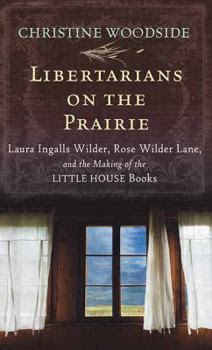

This myth-busting book finally reveals the true story behind the beloved children's classics. Generations of children have fallen in love with the pioneer saga of the Ingalls family, of Pa and Ma, Laura and her sisters, and their loyal dog, Jack. Laura Ingalls Wilder's Little House books have taught millions of Americans about frontier life, giving inspiration to many and in the process becoming icons of our national identity. Yet few realize that this cherished bestselling series wandered far from the actual history of the Ingalls family and from what Laura herself understood to be central truths about pioneer life. In this groundbreaking narrative of literary detection, Christine Woodside reveals for the first time the full extent of the collaboration between Laura and her daughter, Rose Wilder Lane. Rose hated farming and fled the family homestead as an adolescent, eventually becoming a nationally prominent magazine writer, biographer of Herbert Hoover, and successful novelist, who shared the political values of Ayn Rand and became mentor to Roger Lea MacBride, the second Libertarian presidential candidate. Drawing on original manuscripts and letters, Woodside shows how Rose reshaped her mother's story into a series of heroic tales that rebutted the policies of the New Deal. Their secret collaboration would lead in time to their estrangement. A fascinating look at the relationship between two strong-willed women, Libertarians on the Prairie is also the deconstruction of an American myth. 
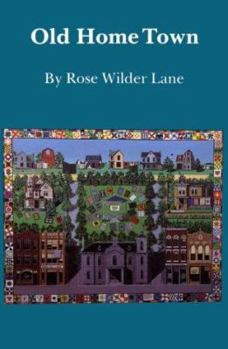

In Old Home Town, Rose Wilder Lane has recreated small-town society of pre-World War I America with a precise feeling for decorum, dress, and kitchen dialogue. Like Sherwood Anderson in Winesburg, Ohio, she describes a community through the stories of certain memorable citizens. The overlay of nostalgia cannot hide some sharp observations about marriage and women's rights.


Newlyweds Molly and David are only sixteen and eighteen years old when they pack up their wagon and head west across the plains in search of a new homestead. At first their new life is full of promise: The wheat is high, the dugout is warm and cozy, and a new baby is born to share in their happiness. Then disaster strikes, and David must go east for the winter to find work. Molly is left alone with the baby--with nothing but her own courage to face the dangers of the harsh prairie winter.
One of my good friends, who has since passed away, did not like when I began reading material that attempted to dismantle the idea that Laura Ingalls Wilder was the sole writer and editor of her Little House books. William Holtz, editor of Dorothy Thompson & Rose Wilder Lane: Forty Years of Friendship, Letters, 1921-1960, also wrote The Ghost in the Little House. The latter is Holtz's biography of Rose Wilder Lane, and he asserts that she should be credited as a co-author of the Little House books.

Ultimately, we all must judge for ourselves how we feel about Wilder and Lane's collaboration. When I began my Laura's Little Houses blog, the first book I read was The Ghost in the Little House, followed by Free Land and Let the Hurricane Roar/Young Pioneers. That left me with the opinion that while Lane may have heavily edited her mother's books, Wilder is the lone author. I doubt Libertarians on the Prairie will alter that opinion, but I also enjoy exploring different points of view and theories. As I read through these books again, my Laura's Little Houses blog is probably where most of the discussion will take place, though more typical reviews should appear here. 


Wednesday, July 11, 2007

The Long Winter - Book Review

This book review did not appear at my blog--at least not in this form. I reread this book by Laura Ingalls Wilder while I was reading William Holtz's biography of Laura's daughter, Rose Wilder Lane. This is my favorite book out of the Little House series and I figured I would share my thoughts with you.

Cheryl

*

On the Dakota prairie, the muskrats built their thick-walled houses and the geese flew south with great haste, not even stopping to rest in the Big Slough. Pa Ingalls watched these signs and worried of what they foretold.

The Long Winter by Laura Ingalls Wilder continues the saga of the Ingalls family--pioneers who continued to move west until they finally settled in the new town of De Smet in Dakota Territory. A surprise October blizzard leaves Pa fearful for his family’s safety as their claim shanty is in no condition to withstand the seven months of storms a wise Indian has warned them of.

Pa moves Ma, Mary, Laura, Carrie and Grace into the store building in town so they can be snug and warm, and close to supplies. But the constant blizzards, sometimes only a day or two apart, keep the trains from reaching De Smet. There is no coal, no kerosene, no flour, and no game to hunt. The men go to work on sunny days with picks and shovels, trying to clear the Tracy cut so that the trains can get through to the townspeople who are slowly wasting away. Then the word comes--no trains until spring, and the people of De Smet wonder how long they can survive.

The days are filled with chores and lessons. Ma, Mary, Laura, and Carrie take turns grinding seed wheat in the coffee mill while Pa hauls hay from the claim. Pa and Laura, and sometimes even Ma and Mary twist hay to feed the fire. They eat only two meals a day and go to bed early to save hay and food. Laura notices how pale Carrie looks these days. The store shelves are empty and there are no wages because there has been no work since the trains shut down.

Cap Garland and Almanzo Wilder, who runs the feed store with his older brother Royal, set off on an early clear morning to find a farmer south of town who might have plenty of seed wheat to sell. It is a cold, long trip as their horses and sleds fall into deep snow drifts and have to be dug out. They run alongside their sleds, stamping their feet and slapping their hands against their frozen bodies to prevent frostbite.

They hustle to pack sixty bushels of seed wheat onto their sleds and make it back to town before the next storm. They spy a blizzard cloud in the northwest, blotting out stars one by one. They push their tired horses faster while the townspeople of De Smet worry over Cap’s and Almanzo’s fate, and the wheat that might keep them from starvation.

The reason I am drawn to this book is because of its wonderful descriptions. Wilder paints a clear picture of what it was like to live in Dakota Territory during that harsh winter. From the hunger for food, to the frost covered nails on the roof of her house, to the piercing screams of the constant blizzards, Wilder pulls me in. I feel the pain Laura experiences as she watches her family suffer through the dangers of living in a new town where not even rabbits can be hunted for food. I admire Almanzo and Cap as they risk their lives to save the townspeople. And I join in the excitement of waiting for that first train to arrive after months of no supplies.

A book of courage against seemingly insurmountable odds makes The Long Winter a must read for all Laura Ingalls Wilder fans.

The Ghost in the Little House - Final Comments

Part 5

I stayed up last night to read the final two chapters of The Ghost in the Little House. At the age of 78, Rose was contacted by the editor of Woman's Day and asked to make a trip to Vietnam. Chapter 20 of Holtz's book is dedicated to Rose's trip--what she discovered, her opinions on what was going on in Vietnam at the time, and the article she ended up writing. Rose told the story of "the Vietnamese people in their centuries-old effort to throw off a series of foreign oppressors." Rose was very concerned about the Communist threat in America and abroad, and it appears those concerns shaped her story on Vietnam. As a lover of history, I found this chapter particularly interesting.

Prior to her death in 1968, Rose planned another trip to Europe. She was to set sail from New York on November 9th. Some time earlier, Rose decided she was suffering from diabetes--as her mother had. Her fear of doctors caused her to create a new diet for the ailment which she had self-diagnosed. On October 29th, she died in her sleep in her Danbury, CT home. Roger Lea McBride, who had been in Rose's life for some time by this point, brought Rose's ashes back to Mansfield and laid them beside the burial place of Almanzo and Laura.

I've heard it said that most readers do not bother to look at prologues and epilogues, but to not read Holtz's epilogue would be to miss out on what happened after the deaths of the Wilders and their daughter. Laura's books continued to sell. McBride found Laura's manuscript "The First Three Years and a Year of Grace" and her letters to Almanzo in 1915 when she went to visit Rose in San Francisco and to see the Panama-Pacific International Exposition. The first was published as The First Four Years by Harper and Row in 1971; and three years later, West from Home would be published. Then came Landon's televsion show Little House on the Prairie and a TV dramatization of Let the Hurricane Roar titled Young Pioneers.

Holtz goes on to discuss how he became involved in writing his biography of Rose and he claims that even at the time he was writing this book, "Rose is regarded with suspicion in Mansfield, where people tend to be protective of her mother's reputation." He talked about three other people--Rose Ann Moore, William Anderson, and Donald Zochert--who also investigated Rose's involvement in the writing of Laura's books. He goes so far as to claim that Zochert, "guessed privately at more than he could prove regarding Rose's hand in the books." Holtz says there is a "spell of the mythical Laura Ingalls Wilder, frontier heroine and untutored genuis of the Ozarks, which prevented an adequate assessment of the daughter's hand in the mother's work," further claiming that Rose had created a shield that no one could penetrate.

The author sums up his book with what he hopes to have accomplished and that it was a "happy task to set the record straight."

I have experienced many emotions while reading this biography of Rose Wilder Lane. I have at times been excited to learn more about Laura and Almanzo's only surviving child. But a sadness fills my heart to think of who Rose was, as portrayed in this book. She is someone who seems to have been ruled by her own emotions--taken over by bouts of depression and harboring a resentment towards her parents. Rose always desired to write something more substantial than the meaningless articles she penned to pay her bills.

I wish I could say I came to a conclusion now that the book is over, but I haven't. I know what it is like to have a good editor, but just because I accept her suggestions does that mean I should share the byline with her? Holtz seems to make a big deal out of the fact that Rose typed all the manuscripts up for Laura. Perhaps Laura felt she did not need a typewriter if Rose had one; especially if Rose was going to review her manuscripts anyway.*

While it has been my experience that being prolific in one aspect of writing does not mean you will do as well in other areas, it still shows that Laura had some skill with a pen and paper. And while Holtz paints Laura as being a dunce when it comes to fiction writing-- so ignorant that she couldn't even take instructions from Rose on how to edit her own manuscripts--he can't possibly explain away her ability to write thought provoking articles for the Missouri Ruralist.

I am disappointed that Holtz took the road of discrediting Laura to prove his theories. If his theories are correct, they should have been proven without attempting to destroy Laura's reputation. It appears he feels there is some big secret that he has been smart enough to uncover, which couldn't have been unearthed while Laura and Rose were alive.

Maybe he's right. Maybe Laura and Rose did work hard to keep the public in the dark about how much Rose contributed to Mama Bess's books. But I find it hard to believe that a child who wouldn't even help her elderly mother up when she fell down in public would feel obligated to keep such a secret, even after her mother's death.

So, while this book is ended, I still have lots more to do. As I mentioned earlier this week, I am going to review the Appendix at the end of Holtz's book which includes copies of passages from Laura's manuscripts and a version revised by Rose. I will compare these to my 1971 copies of the Little House books. And then I will see if I can get my hands on a copy of Free Land to see if the writing style is similiar. This might just serve to confuse me, however, because Holtz contends in his epilogue that, "Any acknowledgement of the mother-daughter relationship as writers [in Mansfield] casts Rose in the role of borrowing from her mother's work."

I hope you have enjoyed journeying through The Ghost in the Little House with me. I really liked reading this biography of Rose Wilder Lane when it spoke solely about Rose. She was an interesting but complex person. She got to travel to places I could only dream of seeing. And she made a name for herself in the world of writing, that seems after reading this biography, to be underrated.

I don't know if I will ever find the answers to my questions. I might never know what I feel about Rose's contributions to Laura's books. At some point, I might even enjoy living in blissful ignorance on what the truth really is. But I am glad I stuck with Holtz's book to the end, as it has renewed for me a desire to move forward with Laura Ingalls Wilder projects of my own.

*Author's note: I deleted a reference to Holtz not mentioning Laura's work for the Missouri Ruralist and her poetry because I later found a passage where he had spoken of them.

The Ghost in the Little House - Book Review Part 4

If I sat down to write this entry a few days ago this message would have had a very different tone. I came across some of Holtz's comments that infuriated me. I almost abandoned the book on the spot, after spending numerous hours on it and being less than one hundred pages away from the end.

It started around page 292 when Holtz said it took Rose "more than a year of intermittent work to bring By the Shores of Silver Lake to publishable form." He claims that Laura's letters to her agent George Bye were written with instructions from Rose and that the two women were in cahoots to keep Bye in the dark about them working on the books together.

Then we move to the discussion of "The Hard Winter" manuscript which starts on page 302. Holtz says we can find, "mammoth and defining evidence of Rose's hand in converting her mother's primitive narrative into a lively and publishable manuscript" and he claims she rewrote the entire thing. He goes on to say that Rose did similiar work to all the other books too, but at this point Rose "seems to have abandoned any pretense at instructing her mother." The word "primitive" above is bolded by me because it really irked me when I read it, just like the next passage I will mention.

On page 306, Holtz has moved on to Wilder's next manuscript Little House on the Prairie which he once again says is mostly written by Rose. He cites as an example the chapter entitled "Fourth of July". This is what he had to say: "Nowhere does the story leap more clearly to the eye with Rose's ideological imprimatur than in what she accomplished with Mama Bess's rudimentary chapter "Fourth of July"...the passage (where Pa begins to sing My Country 'tis of Thee and the entire town joins in) is wholly Rose's creation, and in it she has made her mother not merely a romantic but also an ideological heroine." Once again, I have bolded the one word that stuck in my craw.

By this time in Rose's personal life, she was against big government and was more into the writing and sharing of political theory than fiction writing. Holtz says during this time, Rose barely worked on anything of her own, but instead concentrated on rewriting her mother's books. The passage he mentions from "Fourth of July", as well as other passages in Mama Bess's books, he claims shows Rose trying to weave her ideological beliefs into her mother's stories.

Rose's work on Laura's books then takes a back seat to Rose's life--being investigated by the FBI because of a postcard she sent to radio commentator Samuel Grafton which they thought was subversive, her refusals of rationing cards during WWII, her attempts to avoid income tax by making as little money as possible, and how her ideological beliefs further developed after WWII and into the Cold War.

The most interesting chapter so far is the one entitled "Mother Remembered." Mama Bess has died and Rose finds herself more prosperous than she had been in years thanks to the royalties from her mother's books. Holtz has copied a letter from Laura to Rose which was written five years before her death which Laura signed as Mama Bess with Laura Ingalls Wilder in parenthesis. Holtz claims this is Wilder's last assertion of her independent status as a writer.

The chapter makes a mention of how Rose had to adjust to life without her mother, which seemed very odd to me, unless it was meant to say Rose was finally free of the burden of caring for her elderly parents (Almanzo had died in October of 1949 at the age of 92.)

But the one thing that really sticks out to me is that Rose seems to want to continue the supposed ruse that Laura wrote her famous books all by herself. On pages 349 and 350 we learn that Rose now possessed her mother's manuscripts that had been left at Rocky Ridge Farm. They were discovered by Mr. and Mrs. Litchy who were working to make Rocky Ridge a memorial to their most famous resident. Rose returns the published manuscripts to the Litchys for use at the museum with a letter "cautioning them with the old fiction that they were early drafts not representing her mother's final intentions." Rose even went on to defend her mother when an article sought to claim that Laura "knew she could achieve a more artistic effect by altering the true facts occasionally." She wrote a letter to the author, Louise H. Mortenson in which Rose insists that Laura wrote the literal truth. Rose supposedly even took William T. Anderson to task when a copy of his booklet about the Ingalls family suggested that the Ingalls family had neighbors their first year in De Smet. She wrote, "This is a formal protest against your proposal to publish a statement that my mother was a liar." Holtz claims that Anderson corrected his copy to make it agree with Laura's books.

One has to wonder why Rose would go through all the trouble to protect the memory of a woman she seemed to dislike. If she and her mother battled so much, why would Rose insist on keeping their lie alive? Wouldn't it have made Rose even more famous if she came clean about all the work she did on her mother's books? Could revealing this hidden fact not have been Rose's chance to exact justice for her years of mistreatment?

I have only two chapters left to go and my mind is awash in suppostions. At the end of the book I found an appendix which shows samples of Laura's manuscripts versus what Rose wrote, so I know my research isn't done. I will pull out my 1971 Harper and Row Little House books and maybe even purchase Rose's Let the Hurricane Roar and Free Land to compare them.

Should I do this? Will it further confuse me? Or will it make things crystal clear and leave me wishing I left the whole thing alone? I don't know. I guess I'll have to think on it while. One thing is certain, that Holtz's book when he sticks solely to Rose's life and not to discrediting Laura, is a real page turner. I should know, I've been staying up too late every night to read it.

The Ghost in the Little House - Book Review Part 3

Since my last post about approaching this book with an open mind I have gone from loving the book to being disappointed. I have never experienced such joy and sorrow over learning something new.

This is the only biography of Rose Wilder Lane that I am aware of. From what I've read she certainly had an interesting life full of travels and writing. While I had heard about Let the Hurricane Roar and Free Land, I did not know they were written with her Ingalls grandparents and her father respectively as the inspiration behind these two stories. I am overjoyed to learn this much about my favorite family.

I am at a point where Laura's writing career is well underway. She has written and published Little House in the Big Woods, Little House on the Prairie, Farmer Boy, and On the Banks of Plum Creek. But the success of these novels is all attributed to Rose in Holtz's book. He gives Laura little, if no credit, in the writing of them. Where earlier Rose complained over the clogging details her mother included, now she says Laura has not included enough details. And while Holtz does mention Laura's writing for the local newspaper, he credits Rose with getting Laura published in the field of fiction because of her connections.*

It would be difficult to prove his point--Rose is the co-author of the Little House series--if he did not discredit Wilder in some way, but there is one comment that turned me off entirely.

Free Land--which was a great success for Rose--gained her fame and fortune like she had never known. It was an eight-installment series which ran in the Saturday Evening Post over a two-month period. The hero of this series, David Beaton, "pits his courage, skill, and endurance against the Dakota plains in the effort to make a farm for his wife and children." We already know that this story is based upon her father's life. During the writing of Free Land, Rose--who now lived in New York City-- corresponded with her father, asking him all types of questions so that she could authenticate the narrative.

One page 281 of Holtz's book it states, "...Rose had gone to some lengths to avoid a facile optimism. Young David's early marriage, a cliche of romance, turns out to be a mistake of the heart, but one he resigns himself to live with." As a reader who already knows this if the life of Almanzo Wilder, this portion of the text infers Almanzo saw marrying Laura as a mistake.

If I had no prior knowledge of the Wilders this comment would have elicited no response--except perhaps pity. But I have been studying the Wilders and their families for years. Through Laura's own books as well as those written about her, I have learned that while life was never easy for the Wilders, they stuck it out and eventually lived more comfortably. Farming life was hard, especially after Almanzo's stroke; and they suffered the loss of a child, a home, and most of their personal belongings in the early years of their marriage. But this comment seems to add one more loss to all the hardships they endured together.

Perhaps it is the hopeless romantic in me which sees them as madly in love with each other or the glossed over version of their life which I watched as a child every Monday night on Michael Landon's Little House on the Prairie which clouds my judgment. All marriages weren't happy--even back then.

I've tossed it around in my head several times since reading this passage the other night and I can't get away from the feeling that this comment is only there to further substantiate the claims that Laura was not a very nice person. I felt it an unneccessary dig at an icon of children's literature whose abilities have continually been called into question by the author.

Yet still, I have to admire a piece of work which challenges me to think differently about a topic which I am familiar with. Not that I am ready to say I believe Holtz's claims that Rose should be credited as co-author of the Little House books. I am no closer to thinking that than I was when I first started. But I still have over 180 pages left to convince me. I have to admit I can't wait to sit down and read it every night so I can learn more about Rose and her writing career. I can relate to her bouts of insecurity and desire to write something more of substance than articles for Country Gentleman or editing her "mother's damn juvenille" as she often called it. And isn't that what all writers strive for--to keep their readers interested and get them to relate to their characters? I am willing to call Holtz's book a success from that perspective.

*Author's note: This paragraph has been corrected. I had originally stated that Holtz never mentioned Laura's work for the newspaper, but while researching a passage for another entry, I did stumble across Holtz's paragraphs about Laura's writing and posted a follow-up entry. Now that I am reposting this review here, I felt it appropriate to correct the original text.

The Ghost in the Little House - Book Review Part 2

Last spring I started a book titled A Ghost in the Little House by William Holtz. It is a biography of Rose Wilder Lane, the daughter of Laura Ingalls Wilder. As many of you know, I deeply admire Wilder's writing and my bookshelves are lined with numerous titles by and about Wilder and her family.

This book is controversial in that Holtz claims that Rose was the co-author of the now famous Little House series. I've forced myself to keep an open mind while reading it, because I doubt Holtz's claims. Being an editor, doesn't make you a co-author, in my mind.

The beginning was rough for me to get through because it painted a very different picture of Rose's parents than I was used to hearing. Everything I read up to that point spoke of how well liked Laura and Almanzo were. But these were the recollections of friends and neighbors, not the child who lived with them and who spent her adult life feeling like she was committed to taking care of her elderly parents.

I did manage to make it past that part of the timeline and move into Rose's travels, which I found very interesting. She had an amazing life from that perspective. But even in this, she was unhappy according to Holtz because she was forced to write articles to get cash, instead of working on something of substance. And, she always felt she must return to Mansfield, MO upon occasion to check on her parents.

I've now reached the point where Rose is living with friends in the old house at Rocky Ridge Farm. She had a new stone house built for her parents to live in and then she redecorated the old one to her tastes. By this time, Rose was in her early forties. The criticism of Laura begins again. Rose feels interrupted by her mother constantly. References to how harsh and selfish Laura was flow into the text. And once again, I find myself having a difficult time reading about my beloved author in this context.

I am a little over halfway through the book and I know I must read it until the end because I need to know how Holtz supports his idea that Rose should be credited as co-author. In the end, perhaps I will believe as he does. And I wonder what, if any, affect this will have on my opinion of Wilder's books and her abilities as an author. Will I end up regretting reading this book? Will I be thankful my eyes were opened?

I really can't say right now. But as I make it through to the end, I am determined to keep an open mind to the possibilites within.

The Ghost in the Little House - Book Review Part 1

I am copying this entry over from my first blog. Since this book was lengthy and about a subject I am most interested in, my original review spanned several posts. So, you will see several entries which refer to this title in which I will share with you my thoughts as I read through The Ghost in the Little House by William Holtz.

Part 1

I finally purchased The Ghost in the Little House: A Life of Rose Wilder Lane by William Holtz. I had wanted to buy it years ago, but I knew I wasn't yet ready to approach it with an open mind.

I am only 60 pages into this nearly 400-page biography of what seems to be a complex and interesting character. As the reviews on the back suggest, Holtz's biography of Lane attempts to prove Rose Wilder Lane was the co-author of the famous Little House books along with her mother Laura Ingalls Wilder. My deep love for the Little House series and Wilder's other writings is what kept me from purchasing Holtz's book until now.

As the title of this post indicates my intention is to keep an open mind as I read this book, but not even 100 pages into it, I am already struggling. Holtz has made the Wilders out to be less than adequate parents and Rose Wilder Lane is portrayed as a precocious child who understood things way beyond her years. Even the quotes by Rose which appear underneath each chapter's title are carefully selected to make Rose out to seem like the victim of her circumstances.

Chapter 1 - "I hated everything and everybody in my childhood..."
Chapter 2 - "Influences: 1 - 16: no affection, poverty, inferiority"
Chapter 4 - "The worst thing about life is the necessity of trying to do something with it."

There are non-derogatory quotes by Lane for other chapters, but none that I consider inspiring or uplifting. It seems Holtz felt sympathy would influence the reader, thus swaying her into believing Lane was the co-author of the Little House books along with her mother. Perhaps Lane did offer her mother more than editorial advice. I have 300 plus pages to figure it out.